
Orthodontic Relapse: Signs, Causes, Retainers & Treatment
Noticing a crooked lower tooth, a reopened gap, or a retainer that suddenly feels tight can be unsettling. It does not necessarily mean your original treatment…
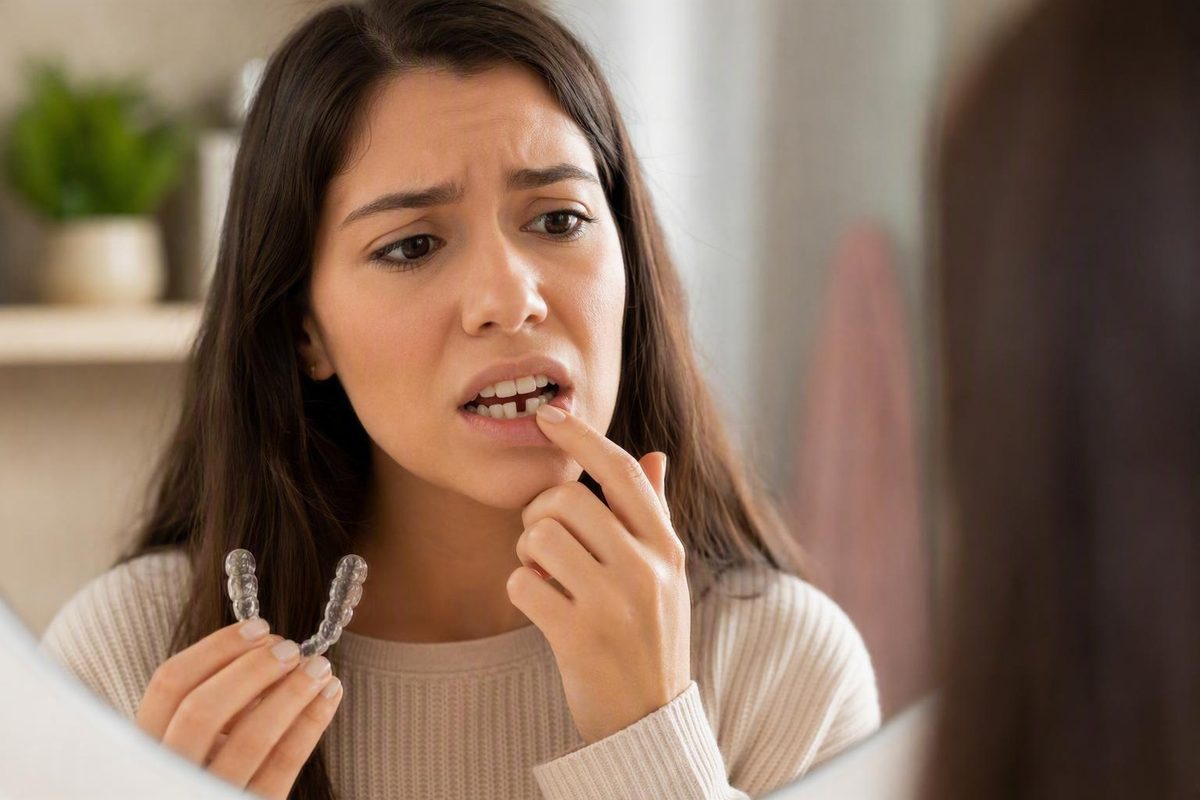
Noticing a crooked lower tooth, a reopened gap, or a retainer that suddenly feels tight can be unsettling. It does not necessarily mean your original treatment failed, and it is not automatically evidence that you did something wrong. Teeth can move after braces or clear aligners for several interacting reasons, including continuing tissue adaptation, growth and aging, changing bite relationships, inconsistent retention, appliance failure, or distortion of a bonded wire.
The safest response depends on why the movement occurred—not simply on how noticeable it looks. A passive retainer may be appropriate when the current position and bite are acceptable. Active aligners or braces may be needed when teeth or bite relationships require correction. A damaged, painful, or non-seating appliance should be assessed rather than forced.
This guide explains how to recognize possible orthodontic relapse, respond safely to retainer problems, and understand how orthodontists choose among monitoring, revised retention, and active retreatment.
What orthodontic relapse means—and what it does not
Orthodontic relapse generally means that teeth move after treatment toward aspects of their pretreatment positions. A lower incisor rotating toward its former angle, renewed lower-front crowding, a reopened space, or the return of part of an earlier bite pattern may fit that description. Relapse can occur after either braces or clear-aligner treatment.
Post-treatment tooth movement is broader than relapse. Changes that may look similar in the mirror include:
- Settling: Small changes in how upper and lower teeth contact may represent post-treatment settling rather than a return to the original problem.
- Age-related drift: Teeth, jaws, supporting tissues, and bite relationships can continue changing over time.
- Loss of retention: Teeth may move after a removable retainer is no longer worn or after part of a fixed retainer detaches.
- Appliance-induced movement: A bonded wire that bends or becomes active can move teeth in an unintended direction.
- True relapse: Part of the original crowding, rotation, spacing, or bite pattern returns.
Direction is therefore important. Movement back toward the original malocclusion differs from a tooth moving somewhere it was never positioned before. A 2022 literature review of relapse and unintended movement with fixed retainers distinguishes these patterns and reports that unwanted movement may occur even when a bonded wire remains attached.
Lower-front crowding and rotation are commonly discussed examples because small changes there can be easy to see. The supplied evidence does not, however, establish a dependable population-wide frequency, and not every irregular lower incisor represents true relapse.
The evidence reviewed here also does not establish that relapse is more common after braces than after clear aligners, or vice versa. Long-term stability may be influenced by the original problem, the direction and extent of tooth movement, bite relationships, growth, supporting tissues, retention, oral forces, and appliance condition.
Visible alignment alone cannot establish:
- whether the movement is relapse, settling, gradual drift, or appliance-induced;
- whether a fixed retainer is passive or distorted;
- whether the roots and supporting tissues limit treatment;
- whether the bite has changed;
- or whether retention alone is appropriate.
A seemingly small cosmetic change may therefore need active treatment if it affects the bite or supporting tissues. Another visible change may be acceptable to monitor or stabilize with a revised retainer.
Signs of relapse: what to look for and feel for
Post-treatment movement may develop gradually enough that the first clue comes from a photograph, flossing pattern, bite change, or retainer rather than from looking in the mirror. If possible, compare your current teeth and bite with photographs, scans, or models from the end of treatment.
Possible visible signs include:
- renewed crowding or overlap;
- one lower front tooth moving in front of or behind another;
- a rotation beginning to return;
- a previously closed space reopening;
- a dental midline shifting;
- a tooth moving in a direction different from the original problem;
- or the upper and lower arches appearing less coordinated.
Functional changes may be equally important:
- teeth meeting differently when you close;
- one tooth or one side contacting first;
- a deeper or reduced overbite;
- an open bite appearing or returning;
- discomfort while biting or chewing;
- or a bite that suddenly feels uneven.
A removable retainer provides useful but incomplete information. An appliance that feels unusually tight, rocks, lifts away from certain teeth, or no longer seats fully may indicate tooth movement, appliance distortion, or both. Fit alone cannot identify which explanation is correct.
Check a fixed retainer for:
- a loose or missing bonding point;
- a lifted end;
- a wire that looks bent, twisted, or displaced;
- new spacing, crowding, or rotation despite the wire appearing attached;
- plaque or gum inflammation around the wire;
- or new difficulty cleaning or passing floss around it.
An apparently attached wire is not necessarily functioning correctly. A released bond may stop retaining one tooth, while deformation may turn a passive wire into one that applies unwanted force. Commercial orthodontic guidance also identifies tight or non-seating removable retainers, altered bites, crowding, spacing, and painful chewing as reasons to request assessment rather than force an appliance (Diamond Braces).
A practical response pathway
Document the change and ask for routine advice when it appears subtle and stable, causes no pain, and has not changed your bite. Take clear photographs from the front and sides under similar lighting. Note when you first noticed the difference and whether the retainer fit changes.
Arrange an earlier orthodontic assessment if movement appears progressive, a space is enlarging, a tooth is rotating, retainer fit is deteriorating, or your bite feels different.
Seek timely professional evaluation if you have pain, tooth mobility, gum swelling or inflammation, difficulty chewing, a sudden bite change, or a detached or visibly distorted fixed retainer. These findings do not diagnose a particular condition, but they are reasonable grounds for checking the appliance, teeth, bite, and supporting tissues.
Do not try to grade the problem using universal millimeter labels found online. The supplied evidence does not validate one set of thresholds for “mild,” “moderate,” or “severe” relapse. A small movement affecting a bite contact or a tooth with limited support may matter more than a larger cosmetic irregularity elsewhere.
Why teeth can shift months or years after treatment
Orthodontic stability is not controlled by one factor. It reflects the interaction among the original tooth and jaw relationships, the correction achieved, supporting tissues, growth and aging, oral forces, retention, and appliance condition.
Tissues continue adapting after active movement
Braces and active aligners move teeth through their supporting tissues. When active treatment ends, the bone, ligament, gum tissues, and bite do not instantly become static. Retention helps hold the corrected position while these tissues continue adapting.
This is why retention is treated as a phase of orthodontic care rather than as an optional accessory. The supplied evidence does not establish one exact stabilization period that applies to everyone, however, or prove that every person faces the same degree of early risk.
Growth, aging, and bite relationships continue changing
The mouth is not fixed at the age when braces or aligners finish. Continued growth and longer-term changes in jaw and bite relationships may alter alignment. Tooth wear, tooth loss, and changes in the supporting gum or bone tissues may also affect stability.
Reduced periodontal support can constrain whether—and how—teeth should be retained or moved again. Gum inflammation also matters because an appliance that is difficult to clean may complicate maintenance. Practice-based sources commonly include periodontal health, missing teeth, restorations, bite relationships, and oral-hygiene access among the factors considered during relapse assessment.
Repeated oral forces may contribute
An orthodontist may ask about grinding, clenching, nail biting, chewing pens, or persistent tongue and lip pressure. These forces can form part of the clinical picture, but their presence does not prove that they caused movement in a particular person.
The same caution applies to soft-tissue and bite forces. They are possible contributors to be considered alongside the movement pattern, appliance condition, periodontal support, and earlier records—not explanations that can be confirmed from a checklist alone.
Retainer use is important, but it is not the whole story
Inconsistent removable-retainer wear is commonly identified as a controllable contributor, particularly when movement occurs relatively soon after treatment. A fixed retainer that detaches may likewise stop holding the intended teeth.
It is still inaccurate and unhelpful to assume that all relapse results from poor compliance. Teeth may move despite careful adherence because individual risk is difficult to predict. Growth, tissue response, the original malocclusion, bite changes, periodontal factors, tooth loss, and appliance distortion may remain relevant. A general dentistry overview similarly describes relapse as involving retention, tissue adaptation, aging, oral forces, and bite changes rather than one universal cause (Santa Rosa Family Dentistry).
If your teeth moved despite following instructions, report what happened without assuming fault. The useful questions are:
- What moved?
- In which direction?
- How quickly did it change?
- Did the bite change?
- Does the retainer still fit?
- Is a bonded wire loose, bent, or difficult to clean?
What to do when a retainer feels tight, breaks, or stops fitting
Safety rule: Do not force a warped, damaged, painful, or non-seating retainer into place. Do not assume that wearing it harder or longer will safely reverse the movement. Contact the treating orthodontist or another qualified dental professional for fit guidance.
Retainers primarily preserve an established tooth position. Braces and active aligners are designed to produce planned tooth movement. Although a clinician may sometimes supervise an appliance strategy for a very limited change, an old retainer should not be treated as a do-it-yourself substitute for active orthodontic treatment. A commercial dental-practice explanation likewise distinguishes clear aligners, which actively move teeth through a planned sequence, from retainers, which primarily maintain position (Pinnacle Dental Associates).
A change in fit may mean:
- the teeth have moved;
- the retainer has cracked, stretched, or worn;
- heat has warped the material;
- repeated use has distorted it;
- dental work has changed tooth shape;
- buildup is interfering with seating;
- or more than one of these has occurred.
Inspecting a removable retainer
Examine the appliance under good light. Look for:
- cracks or splits;
- sharp or rough edges;
- looseness that was not present before;
- bowed, twisted, flattened, or otherwise deformed areas;
- cloudy buildup or discoloration that obscures the material;
- one side seating while the other lifts;
- rocking when gently placed;
- or a new pressure point that causes pain.
If the retainer still seats fully and causes no pain but feels tighter than usual, contact the treating office and describe the change. Do not independently increase wear when the appliance is distorted, the bite has changed, or the pressure is painful.
Inspecting a fixed retainer
Use a mirror and good lighting, but do not pull on the wire. Look for:
- bonding material detached from one or more teeth;
- a lifted or sharp end;
- a kink, twist, or other change in wire shape;
- new space or rotation around an attached section;
- plaque accumulation or inflamed gums;
- or floss catching where it previously passed normally.
A fixed wire may fail in two broad ways. If a bond releases, a tooth may no longer be retained. If the wire deforms while remaining bonded, it may apply active force and produce movement in an unintended direction.
Neither increased wear nor a replacement retainer can be promised to correct a particular amount of movement. A replacement passive retainer may simply preserve the teeth where they are now. Whether that is appropriate depends on the current bite, periodontal support, appliance condition, and treatment goal.
How an orthodontist evaluates post-treatment movement
The first task is diagnosis. The clinician needs to distinguish among:
- return toward the original malocclusion;
- post-treatment settling;
- gradual age-related or dental drift;
- loss of retention after appliance failure;
- and movement associated with a distorted or active fixed retainer.
That distinction changes the response. Replacing a retainer may be reasonable when the present alignment and bite are acceptable. It may be inadequate—or may preserve an unwanted position—when active correction is needed.
Tooth and bite examination
The orthodontist may assess:
- which teeth moved and in what direction;
- crowding, spacing, and rotations;
- upper and lower dental midlines;
- overbite, open bite, and front-to-back relationships;
- contacts when biting and during jaw movement;
- whether the change resembles the pretreatment problem;
- and whether movement is localized or affects the wider arch.
Appliance examination
For a removable retainer, the clinician can inspect seating, pressure areas, material condition, and whether the appliance still corresponds to the intended tooth position.
For a fixed retainer, the assessment may include each bond, the wire’s shape, whether the wire appears passive, and whether plaque or inflammation interferes with maintenance. Earlier photographs, scans, or models may help establish whether the wire or teeth have changed.
Teeth and supporting tissues
A treatment plan must account for more than straightness. The assessment may include:
- gum inflammation or recession;
- periodontal support;
- tooth mobility;
- missing teeth;
- crowns, bridges, implants, fillings, or veneers;
- untreated dental disease;
- and whether the proposed appliance would make hygiene difficult.
Grinding, clenching, oral habits, trauma, prior retainer use, recent dental work, and the timing of the change may also be discussed. These factors may help explain the pattern or limit treatment options without proving one single cause.
Records and imaging
Current photographs and digital scans or physical models can document tooth position and permit comparison with earlier records. Radiographs may be used when clinically indicated to examine roots, bone levels, missing or impacted teeth, or other treatment constraints. A commercial orthodontic assessment guide similarly describes evaluating tooth position, bite, gum and bone support, retainer history, scans, and imaging when selecting a response (Purchase Park Orthodontics).
Not everyone needs every record. The choice depends on the symptoms, examination, movement pattern, and proposed treatment. A change described as “minor” may still require active correction if it creates an unfavorable bite contact or occurs around a mobile tooth or limited periodontal support.
Retainers, aligners, or braces: how management options differ
There is no universal winner for orthodontic relapse. Management is better organized by purpose:
- observe a stable and acceptable change;
- retain the current position;
- actively correct a limited problem;
- or comprehensively retreat the teeth and bite.
Observation and monitoring
Observation may be considered when:
- the change is small and appears stable;
- the bite and oral health are acceptable;
- the patient is satisfied with the present position;
- and no appliance problem requires intervention.
Monitoring should be deliberate rather than passive. Photographs or scans can establish a baseline, and the retention plan may still need to be reviewed.
Replacement or revised retention
A new passive retainer may be considered when the current position is acceptable and the goal is to prevent further movement. It may also replace an appliance that is cracked, warped, loose, or incompatible with recent dental work.
A passive retainer should not be presented as equivalent to planned active treatment. If teeth need controlled rotation, space closure, root movement, or bite correction, an active appliance may be more appropriate.
| Retainer type | Potential advantages | Practical limitations |
|---|---|---|
| Clear removable retainer | Discreet; removable for eating and cleaning; covers the tooth surfaces | Depends on adherence; may crack, loosen, discolor, or warp; fit needs monitoring |
| Hawley-type retainer | Removable; acrylic-and-wire construction may be adjustable in selected professional uses | More visible; depends on adherence; requires cleaning and safe storage |
| Fixed bonded retainer | Functions without daily insertion; may be useful when selected teeth need continuing retention | Requires careful cleaning and monitoring; bonds can fail; the wire can distort or cause unintended movement |
No design eliminates the need for follow-up. The review by Inchingolo and colleagues helps explain the choice: fixed retainers reduce dependence on remembering a removable appliance but require checks for detached or distorted wires; removable retainers allow easier brushing and flossing but depend on consistent wear. Neither result supplies a universal schedule, so the clinician should match monitoring and wear instructions to the appliance and the patient.
Limited active correction
Active clear aligners may be considered for selected relapse patterns. They use a planned sequence of trays to move teeth rather than simply holding them. Suitability depends on the required movements, bite, periodontal support, restorations, hygiene, and ability to wear and care for removable appliances consistently.
Limited braces may be useful when direct bracket-and-wire control is preferred for localized movement. “Limited” describes treatment scope, not necessarily clinical simplicity.
Comprehensive retreatment
More extensive braces or aligner treatment may be considered when the problem involves:
- substantial crowding or spacing;
- several rotations;
- arch-form or arch-width changes;
- upper-to-lower arch relationships;
- a returning overbite, open bite, or other bite discrepancy;
- or movement that cannot be corrected safely in isolation.
The least visible appliance is not automatically the best mechanical choice. Roots, bone, gum support, missing teeth, restorations, hygiene access, adherence, and the complexity and direction of movement may rule options in or out. Readers comparing broader appliance trade-offs can also review this guide to how braces and aligner options differ.
The strongest comparative review in the supplied evidence was published in 2013 and examined interventions for relapsed lower-front teeth after earlier fixed orthodontic treatment. Its searches ran through November 9, 2012, and it found no eligible randomized controlled trials. It therefore could not determine whether labial or lingual braces, bonded lingual appliances, active removable retainers, clear aligners, or other eligible approaches were superior (Cochrane review).
That finding does not prove that the options are ineffective, and it does not show that they perform equally well. It means the review lacked eligible randomized evidence for a comparison. Its conclusion should not automatically be generalized to every relapse pattern because the review focused on lower-front-tooth relapse following previous fixed treatment.
Reducing the chance of further movement
Retention is an ongoing part of orthodontic care, but appliance type and wear frequency are individualized decisions. Follow the schedule provided for your teeth and treatment rather than substituting a universal full-time or nightly rule found online.
Care for a removable retainer
- Wear it according to the treating professional’s instructions.
- Clean it using the recommended method and products.
- Keep it away from hot water and other damaging heat.
- Store it in a protective case when it is not in your mouth.
- Keep it away from pets and places where it could be discarded accidentally.
- Check regularly for cracking, looseness, rough edges, or altered fit.
- Arrange professional advice when it warps, breaks, loosens, or stops seating normally.
Commercial orthodontic guidance consistently recommends avoiding heat, using protective storage, monitoring fit, and contacting the treating office rather than forcing a very tight or ill-fitting appliance (San Antonio Orthodontics).
Do not wait until movement is obvious. Periodically notice whether insertion requires more pressure, whether the tray lifts over one tooth, or whether your bite feels different after removal.
Maintain a fixed retainer
- Clean carefully around the wire and bonding material.
- Use the flossing or interdental method recommended by your dental team.
- Check whether each bonded point remains attached.
- Watch for changes in wire shape.
- Report unexpected spacing, rotation, or crowding even if the wire looks intact.
- Arrange assessment of detachment or distortion.
A bonded retainer is not a “set it and forget it” device. Both loss of retention and unintended movement are possible, so the bonds, wire shape, tooth position, and surrounding gum health need monitoring.
Keep dental and orthodontic monitoring connected
Routine dental care can identify cavities, gum inflammation, hygiene difficulties, tooth mobility, and changes around restorations. Orthodontic follow-up may be particularly useful when there is a fixed retainer, previous relapse, periodontal disease, a missing tooth, grinding, or another stability concern.
If you grind, clench, bite nails, chew objects, or notice persistent tongue pressure, discuss it as part of the broader plan. The aim is not to assign blame but to consider forces that may affect appliance choice, comfort, wear, or monitoring.
Even careful adherence cannot guarantee that teeth will never change. Retreatment likewise does not create permanent immunity from movement. After correction, the clinician should establish a revised retention strategy based on what moved, possible contributing factors, oral health, and the maintenance burden the patient can realistically manage.
What the evidence can—and cannot—tell you
Not all sources carry equal evidentiary weight. Systematic reviews and well-designed clinical studies generally deserve more weight than uncited recommendations on commercial practice websites. Practice articles may describe common clinical options and practical warning signs, but precise timelines, prevalence estimates, treatment thresholds, and claims of superiority should not be treated as established merely because they sound specific.
The 2013 Cochrane review had a narrow scope: interventions for lower-front-tooth relapse after previous fixed orthodontic treatment. Its searches ran through November 9, 2012, and no randomized controlled trial met its eligibility criteria. It therefore could not identify a superior intervention among the approaches considered.
Three boundaries are important:
- The review does not show that relapse treatments fail.
- It does not show that all treatments are equivalent.
- It should not be generalized automatically to relapse involving other teeth, bite relationships, prior aligner treatment, or different clinical circumstances.
The supplied 2022 literature review adds context by describing relapse as multifactorial and separating true relapse from movement associated with fixed retainers. It reports that unwanted movement may occur despite a retainer remaining bonded. However, it was not a meta-analysis, its reported study counts are internally unclear, and its search ended in May 2022. It supports caution but cannot provide a precise prediction for an individual patient.
In a 2023 systematic review of fixed and removable retainers, Francesco Inchingolo and colleagues found that both approaches can maintain orthodontic results. It described fixed retainers as generally favorable for longer-term alignment, while removable retainers depend on wear and may fail or be lost. The included studies differed in retainer design, wear instructions and follow-up, so this comparison cannot predict an individual’s relapse risk or set one wear schedule. The review concerns retention after treatment, not which active treatment works best once relapse has occurred.
Taken together, the supplied evidence does not establish:
- an exact population-wide prevalence of orthodontic relapse;
- one retainer schedule suitable for everyone;
- validated universal millimeter thresholds for severity;
- whether relapse is more common after braces or aligners;
- a typical retreatment duration;
- how much movement an old retainer can safely correct;
- or dependable treatment-cost or outcome estimates.
Those limits should not be mistaken for proof that nothing is known. They mean that diagnosis and treatment selection must be individualized and that precise online promises should be viewed cautiously.
Online guidance can help readers recognize changes and prepare questions, but it cannot assess appliance fit, gum and bone support, root position, bite contacts, or treatment safety. Aligner Source publishes general educational information rather than clinical diagnosis or treatment planning; its terms state that treatment decisions belong with an orthodontist.
Frequently asked questions
Can a retainer fix minor orthodontic relapse?
Sometimes a clinician may use a properly fitting appliance as part of managing a very limited change, but “minor” appearance does not establish that this is safe. Retainers are primarily intended to maintain tooth position, while active aligners and braces are designed to produce planned movement.
Do not force an old retainer or independently increase wear if it does not seat fully, is warped, causes pain, or changes your bite. An orthodontist should first determine whether the issue is tooth movement, appliance distortion, or both. If the current position is acceptable, a new passive retainer may be used to hold it. If correction is required, an active appliance may be recommended.
Why are my teeth moving even though I still have a bonded retainer?
A bonded retainer can detach at one or more attachment points, allowing a tooth to move. It can also bend or distort and begin applying unintended force while still appearing attached. Movement in a direction unlike the original problem is a particularly useful reason to have the wire checked.
Teeth not connected to the wire may also change as growth, bite relationships, or supporting tissues change. Arrange an assessment if you see new spacing, rotation, crowding, wire distortion, gum inflammation, or an altered bite.
How long should I wear a retainer after braces or aligners?
The supplied evidence does not establish one schedule appropriate for every patient. Retainer type, initial wear frequency, later maintenance, and overall duration should be individualized according to the original problem, treatment result, relapse risk, periodontal health, age, appliance condition, and ability to maintain it.
Follow your treating professional’s instructions rather than adopting a generic online schedule. If you stopped wearing the retainer or it no longer fits, ask for guidance before resuming or increasing wear—especially if it is painful, warped, or will not seat fully.
Do wisdom teeth cause orthodontic relapse or lower-front crowding?
The supplied practice-based sources disagree. Some associate wisdom teeth with shifting, while others state that they are not the primary cause of front-tooth crowding. The evidence pack does not contain sufficiently strong independent evidence to resolve that disagreement or assign causation in an individual case.
Wisdom teeth may require assessment for their own dental reasons, but their removal should not be assumed to prevent orthodontic relapse. Crowding should be evaluated alongside retention, growth, aging, bite changes, periodontal support, and the condition and position of the wisdom teeth. One orthodontic practice source notes that lower-front crowding can occur for reasons other than wisdom teeth and that wisdom teeth are not the sole explanation (Beverly Hills Braces).
Can orthodontic relapse happen again after retreatment?
Yes. Retreatment creates another corrected position, but it does not eliminate growth, aging, tissue response, oral forces, periodontal changes, retention lapses, or appliance failure. Future movement therefore remains possible.
A retreatment plan should include a revised retention strategy rather than treating active correction as the final step. Depending on the individual case, that may involve a removable retainer, fixed retainer, or combination, together with monitoring suited to the teeth, bite, gum health, hygiene needs, and previous movement pattern.
If something has changed, do not panic or assume you caused it. Compare your current teeth and bite with earlier records if available. Inspect the retainer without forcing or altering it, note how quickly the change appeared, and arrange an orthodontic assessment when fit, alignment, comfort, or bite has changed.
The safest response depends on the mechanism—not merely on how visible the movement is. Whether the plan is monitoring, replacement retention, limited correction, or comprehensive retreatment, long-term review and an individualized retention strategy remain important.