
How Long to Wear Retainers After Braces at Each Stage
Many removable-retainer plans start at 20-22 hours a day for several months, then move to nighttime use while some retention continues for life.
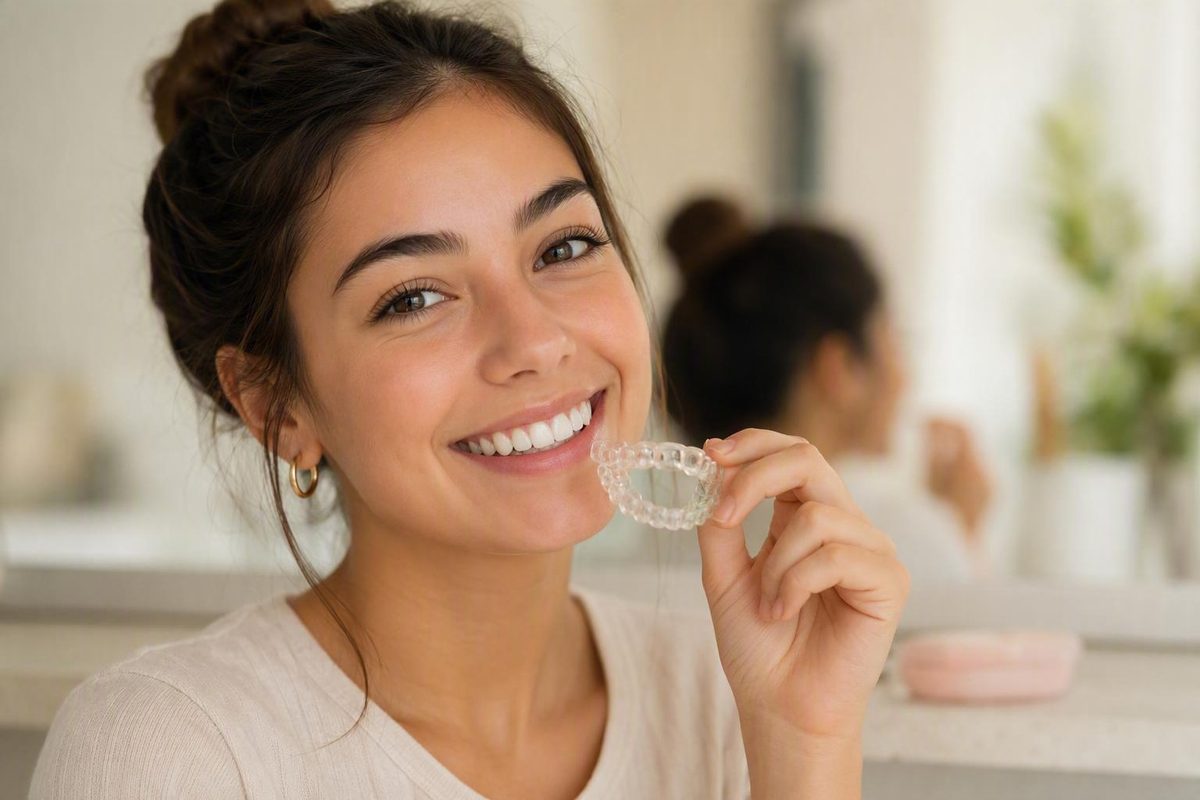
The short answer: expect months of full-time wear and long-term retention
After braces come off, a removable retainer is commonly worn full time for the first several months and then at night for the long term. Full-time wear often means approximately 20–22 hours per day, with the appliance removed for meals, most drinks, brushing, and cleaning. Some orthodontic practices use three to six months as an initial full-time phase, but this is an example rather than a universal prescription; your own schedule may be shorter or longer based on your orthodontist’s assessment. Elassal Orthodontics describes 20–22 hours per day for at least three to six months as its general protocol.
Retention usually does not end after those first months. The American Association of Orthodontists says a retainer is typically needed for life, although the required frequency may decrease over time. In practical terms, lifelong retention usually means preserving an ongoing nighttime habit—not wearing a removable appliance all day for the rest of your life.
Here is an at-a-glance illustration:
| Phase | Illustrative removable-retainer routine | When it changes |
|---|---|---|
| Initial retention | About 20–22 hours per day; remove for meals, most drinks, brushing, and cleaning | When the orthodontist determines that the teeth are sufficiently stable |
| Transition | Nighttime wear | After the orthodontist approves the change |
| Long-term maintenance | Every night or, for selected patients, several nights per week | Ongoing according to the prescribed plan |
The table reflects examples reported by orthodontic providers, not a single evidence-based timetable that applies to every patient. Detailed protocols in the available provider guidance range from about two months of full-time wear to a year or longer.
Your orthodontist’s instructions override every general timeline in this article. Do not switch from full-time to nighttime wear—or reduce the number of nights—simply because a typical calendar period has passed.
This distinction resolves much of the confusion about how long you have to wear retainers after braces: the need for retention may continue throughout life, while the daily time commitment usually becomes much smaller after the initial phase.
Why the schedule changes instead of ending on one fixed date
Braces actively move teeth. Retainers have a different job: they are intended to hold the corrected positions after active treatment has finished. A properly prescribed retainer is not meant to continue the same planned tooth movement produced by braces.
When braces are removed, the teeth may look straight, but the bone and supporting tissues around them are still adapting to their changed positions. Retainers support the corrected positions during this period. Teeth can also move as the mouth and bite continue to change over time. The AAO describes retainers as helping minimize movement while supporting the bone around the teeth as it adapts.
These purposes can be separated into two stages:
- Early support: Hold the result while the surrounding structures adapt after active orthodontic treatment.
- Long-term maintenance: Limit unwanted movement that may occur later.
Movement away from the corrected alignment is commonly called orthodontic relapse. It can appear as renewed crowding, spacing, rotation, or a change in the bite.
Retainers help minimize that movement, but they cannot guarantee that every tooth will remain perfectly unchanged for life. Minor movement may occur despite consistent wear. Removable appliances can also wear out or stop fitting correctly, while a fixed retainer can bend, loosen, or detach.
Stopping retention immediately after braces would remove support during an important period of adaptation. That does not establish one exact deadline for everyone. It explains why removable-retainer schedules commonly begin intensively and then decrease instead of ending abruptly.
The decision to reduce wear should therefore depend on the treating orthodontist’s assessment—not just how straight the teeth look in a mirror or how much time has passed since braces were removed.
A phase-by-phase retainer timeline—and why yours may differ
The following timeline explains how a removable-retainer plan may unfold. It is a framework for understanding the stages, not a replacement for your written instructions.
The day your braces come off
Your orthodontic team checks the result and provides or arranges the prescribed retainer. Confirm:
- which appliance belongs to each arch;
- how to insert and remove it;
- what complete seating looks and feels like;
- when it should be removed;
- how it should be cleaned; and
- what to do if it feels painful or does not fit.
If you receive different appliances for the upper and lower arches, do not assume that they follow identical schedules.
The initial full-time phase
A commonly reported routine is approximately 20–22 hours of removable-retainer wear per day for several months. The appliance is generally removed for eating, most drinks, brushing, and cleaning. Instructions about drinking plain water with the retainer in place may vary, so follow the directions for your appliance.
Consistency matters more than treating the end of a sample range as an automatic finish line. If your orthodontist has prescribed longer full-time wear, continue until that instruction changes.
The transition to nighttime wear
Nighttime-only wear should begin after professional approval—not automatically at three months, six months, or any other date found online. Before changing the schedule, the orthodontist may consider the retainer’s fit, the positions of the teeth, the bite, and signs of movement.
Ask what “nighttime wear” means in your plan. It may mean wearing the appliance for the entire time you sleep or meeting another schedule specified by your orthodontist. The important point is to follow the prescribed wear time consistently.
Long-term maintenance
After a period of nightly use, provider recommendations diverge. Some orthodontists advise every-night wear indefinitely. Others may approve several nights per week for selected patients whose alignment appears stable. Neither approach should be applied universally.
The variation among named provider protocols illustrates the range:
- Dr. Wes Chladny describes a practice protocol of two months of full-time removable-retainer wear followed by wear every night while sleeping.
- Several provider examples use approximately three to six months as the initial phase.
- Cook Orthodontics of Dublin describes day-and-night clear-retainer wear for the first year, followed by nightly wear.
- Other provider guidance allows for full-time wear lasting more than a year in some cases.
These are individual practice protocols, not interchangeable rules. Their differences demonstrate why there is no single switch date for every patient.
Factors the orthodontist may consider include:
- observed tooth stability;
- the original alignment;
- the bite;
- tooth and supporting anatomy;
- treatment complexity;
- the assessed risk of unwanted movement;
- whether the upper and lower arches have different needs; and
- whether retention is being provided by removable appliances, bonded wires, or a combination.
A patient with a more demanding retention situation may be instructed to continue intensive wear longer. A general article cannot assign a schedule based on one feature, such as previous crowding or a particular bite pattern, without an orthodontic assessment.
Clear, Hawley, and bonded retainers follow different routines
Retainer type affects how retention is delivered. It does not remove the need for an individualized plan.
| Retainer type | How it works | Routine and main considerations |
|---|---|---|
| Clear removable | A molded transparent appliance fits over the teeth | Worn full time, nightly, or less frequently as prescribed; depends on consistent use and can be damaged by heat or handling |
| Hawley removable | An acrylic or plastic base and wire help hold the teeth | Follows a prescribed removable-retainer schedule and depends on the patient wearing it as instructed |
| Fixed or bonded | A wire is bonded behind selected teeth | Provides continuous retention while intact; requires careful cleaning and monitoring for bending, loosening, or detachment |
Both clear and Hawley retainers work only when they are worn for the prescribed time. Their removability makes eating and cleaning easier, but it also creates opportunities for missed wear, loss, and damage.
A bonded retainer is attached behind selected teeth, so it provides continuous retention while it remains intact. It requires attentive brushing and flossing as well as periodic professional checks. If the wire bends, loosens, or detaches from one or more teeth, it may no longer be holding those teeth as intended.
The label “permanent retainer” can be misleading. It does not mean that the wire is indestructible or guaranteed to remain effective forever. A bonded retainer may eventually need repair, replacement, or removal based on its condition and the orthodontist’s judgment.
A bonded wire also directly retains only the teeth to which it is attached. It should not be assumed to preserve the position of every tooth in the arch. Dr. Wes Chladny’s overview, for example, notes that fixed retainers are commonly used on front teeth and hold the teeth to which they are bonded, while removable appliances cover a broader set of tooth surfaces.
Some orthodontists prescribe both a fixed wire and a removable retainer. Others use a different arrangement for each arch. The available evidence does not support a universal rule that everyone with a bonded wire either must—or need not—have a removable appliance.
If both were prescribed, continue using both unless your orthodontist changes the plan.
Do you really have to wear a retainer for life?
You should generally expect some form of ongoing retention. “For life” usually describes the duration of the retention habit, not a lifetime of wearing a removable appliance for 20–22 hours every day.
Long-term approaches vary. Some practices advise nightly wear indefinitely. Others allow selected patients to reduce their schedule to several nights per week after stability has been assessed. One provider, for example, describes initial full-time wear lasting from several months to more than a year and later maintenance ranging from a set daily period to several nights per week. That practice explicitly bases the recommendation on individual factors such as anatomy and bite balance.
The available guidance does not establish a universal age, treatment anniversary, or degree of apparent stability at which everyone can safely reduce wear or stop.
A retainer that continues to fit completely and comfortably provides useful information: it suggests there has not been enough change to make the appliance obviously incompatible with the teeth. It is not sufficient grounds for changing the schedule without professional input.
Avoid conducting your own gradual experiment by skipping one night, then two, and eventually most of the week.
The practical trade-off is straightforward:
- Continued maintenance provides ongoing support and helps limit unwanted movement.
- Stopping completely leaves the teeth without that retention support.
Neither consistent removable-retainer wear nor a bonded wire can guarantee that the teeth will remain perfectly unchanged forever. The realistic goal is to minimize movement and preserve the corrected positions as effectively as practical.
What to do after missed wear, tightness, or a poor fit
There is no universally safe number of nights that everyone can miss. The effect of a lapse can depend on how recently treatment ended, the original correction, individual stability, and how long the retainer has been out.
Use fit and symptoms as warning signals. Do not force an appliance that is painful or does not seat completely.
The retainer seats fully and causes only mild pressure
Mild tightness after missed wear can indicate slight tooth movement. Contact the office if the pressure persists, worsens, or leaves you uncertain about whether the fit is acceptable.
Resuming prescribed wear does not guarantee that every change will reverse. Do not independently adopt a more intensive long-term schedule without asking the office.
The retainer is painful, meets marked resistance, or will not seat fully
Do not force it into position. The orthodontic office should assess whether the appliance can still be used, needs replacement, or whether tooth movement requires another response. ATX Braces advises contacting the office when a retainer is painful, cannot be inserted, or does not seat fully.
You notice renewed gaps, crowding, rotation, or a changed bite
Arrange an orthodontic review. These changes can be signs that teeth have moved. An examination can determine whether the existing retainer remains suitable and whether further treatment should be considered.
The removable retainer is lost
Contact the orthodontic office promptly for replacement guidance. There is no single emergency deadline that applies to every patient, but unnecessary delay leaves the teeth without the prescribed removable retention.
The retainer is cracked, warped, or badly worn
Contact the office to ask whether the appliance should continue to be worn while repair or replacement is arranged.
Keep removable retainers away from hot water and other high-heat conditions, which can distort some materials.
A bonded wire bends, loosens, or detaches
Contact the orthodontist for assessment. A partially detached or bent wire may no longer retain one or more attached teeth properly.
Care habits that keep a retainer usable
A consistent routine helps protect a removable retainer:
- Remove it for meals and most drinks.
- Follow your provider’s instructions about whether plain water is acceptable while it is in place.
- Clean it regularly with a soft-bristled toothbrush and lukewarm water.
- Store it in its protective case whenever it is out of your mouth.
- Keep it away from hot water and other high heat.
- Check it periodically for cracks, distortion, rough areas, or changes in fit.
Cleaning products are not automatically suitable for every appliance. Toothpaste and other abrasive products may scratch some materials, while harsh chemicals may cause damage. Follow the manufacturer’s directions and the cleaning instructions supplied by your orthodontist rather than choosing a product based only on general advice.
The protective case gives the appliance a consistent storage location and reduces the risk of loss or accidental damage. Use it whenever the retainer is not being worn.
Fixed retainers require a different routine. Brush carefully around the wire and bonded areas, and use the flossing method or cleaning aids demonstrated by your dental or orthodontic team. Periodic professional checks allow the wire, bonding, nearby teeth, and oral hygiene to be assessed.
Repair or replacement should be based on condition and function rather than a guaranteed lifespan. Request an assessment for:
- cracking or splitting;
- visible warping;
- excessive thinning or wear;
- a loose, bent, or detached bonded wire;
- persistent pain or pressure;
- a removable appliance that no longer seats fully;
- a bite change while wearing the retainer; or
- loss of the appliance.
Material, handling, frequency of use, cleaning, accidental damage, and individual circumstances all affect durability. An appliance does not need to reach a particular age before it may require replacement, and an older retainer should not automatically be discarded if it remains clinically appropriate. General care guidance from Pobanz Orthodontics similarly recommends regular cleaning, avoiding high heat, and storing removable retainers in their cases.
Questions to settle before leaving your braces-removal appointment
The best time to remove uncertainty is when the retainer is delivered. Ask for the instructions in writing or save them somewhere easy to retrieve.
Use this checklist:
- How many hours per day should I wear this retainer now?
- How long do you expect the initial full-time phase to last in my case?
- Which clinical signs will determine when I can switch to nighttime wear?
- What exactly counts as nighttime wear in my plan?
- Should long-term wear remain nightly, or might it eventually decrease to several nights per week?
- Do my upper and lower arches have different schedules?
- Why was each retainer type selected?
- If I have a bonded wire, which teeth does it retain?
- Does the wire cover the complete area of concern, or do I also need a removable retainer?
- How should I clean this specific appliance?
- Which products, temperatures, foods, or drinks should I avoid?
- How should I floss and clean around a fixed retainer?
- What should I do if the appliance is lost, cracked, warped, painful, tight, or unable to seat completely?
- Whom should I contact outside normal office hours?
- When will the fit be reviewed?
- How will you check whether a bonded wire has partially detached or bent?
- Should I bring the retainer to routine dental and orthodontic appointments?
Before leaving, demonstrate that you can insert and remove a removable retainer correctly. Ask the team to confirm that you recognize complete seating. If your plan includes both fixed and removable appliances, ask for the purpose of each rather than assuming one makes the other optional.
The practical answer to how long you have to wear retainers after braces is this: many removable-retainer plans begin with approximately 20–22 hours of daily wear for several months, then move to nighttime use, while some form of retention is typically maintained for life. The burden usually decreases, but there is no universal date for reducing or stopping.
Follow your orthodontist’s schedule, request an assessment before changing it, and contact the office instead of forcing an appliance that is painful or unable to fit fully. This article supplies general information; individualized treatment and retention decisions belong with the treating orthodontist, as explained in the site’s Terms of Use.
Frequently asked questions
How many hours a day should I wear my retainer immediately after braces?
A commonly reported removable-retainer instruction is approximately 20–22 hours per day during the initial phase, with removal for eating, most drinks, brushing, and cleaning. ATX Braces, for example, describes 20–22 hours per day during the first few months as a typical full-time routine.
The duration varies. Use the daily hours and transition point supplied by your orthodontist rather than adopting a generic schedule.
A fixed retainer is different because it remains attached continuously. If you also receive a removable appliance, follow its separate instructions.
Can I eventually wear my retainer only a few nights per week?
Possibly. Some orthodontists approve several nights per week for selected patients after assessing stability, while others advise nightly wear indefinitely. There is no universal point when everyone can safely reduce frequency.
Do not base the decision only on comfortable fit or the time since your braces were removed. Ask your orthodontist whether a reduction is appropriate and how the alignment and fit should be monitored.
Do I need a removable retainer if I already have a bonded retainer?
You might. A bonded retainer directly holds only the teeth to which it is attached, while a removable retainer may cover more of the arch. Some treatment plans use both; others do not.
The answer depends on the bonded wire’s location, the teeth and arches requiring retention, and the treatment result being maintained. Do not stop a prescribed removable appliance simply because the bonded wire appears intact.
Should I wear a retainer that feels tight or does not fit completely?
If it seats completely and produces only mild pressure after a short lapse, return to your prescribed routine and seek advice if the tightness persists or worsens. Mild tightness can indicate slight movement.
If the retainer is painful, meets marked resistance, or will not seat fully, do not force it. Contact your orthodontist for an assessment. The appliance may need replacement, or the teeth may have moved enough to require a different response.
Is the retainer schedule the same after clear aligners as it is after braces?
The broad pattern may be similar: an initial period of more intensive removable-retainer wear followed by nighttime maintenance. Both braces and clear aligners move teeth, and provider guidance commonly describes retention after either treatment.
That does not mean the schedules must be identical. The appropriate routine depends on the completed treatment, tooth and bite stability, retainer type, and the orthodontist’s assessment. Follow the instructions given at the end of your specific treatment rather than reusing a schedule from a previous course of braces or aligners.