
How Much Are Children's Braces? Costs & Insurance
Start with a $3,000–$7,500 pre-insurance budget, then compare appliance and Phase 1 ranges, benefit limits, and itemized quote details.
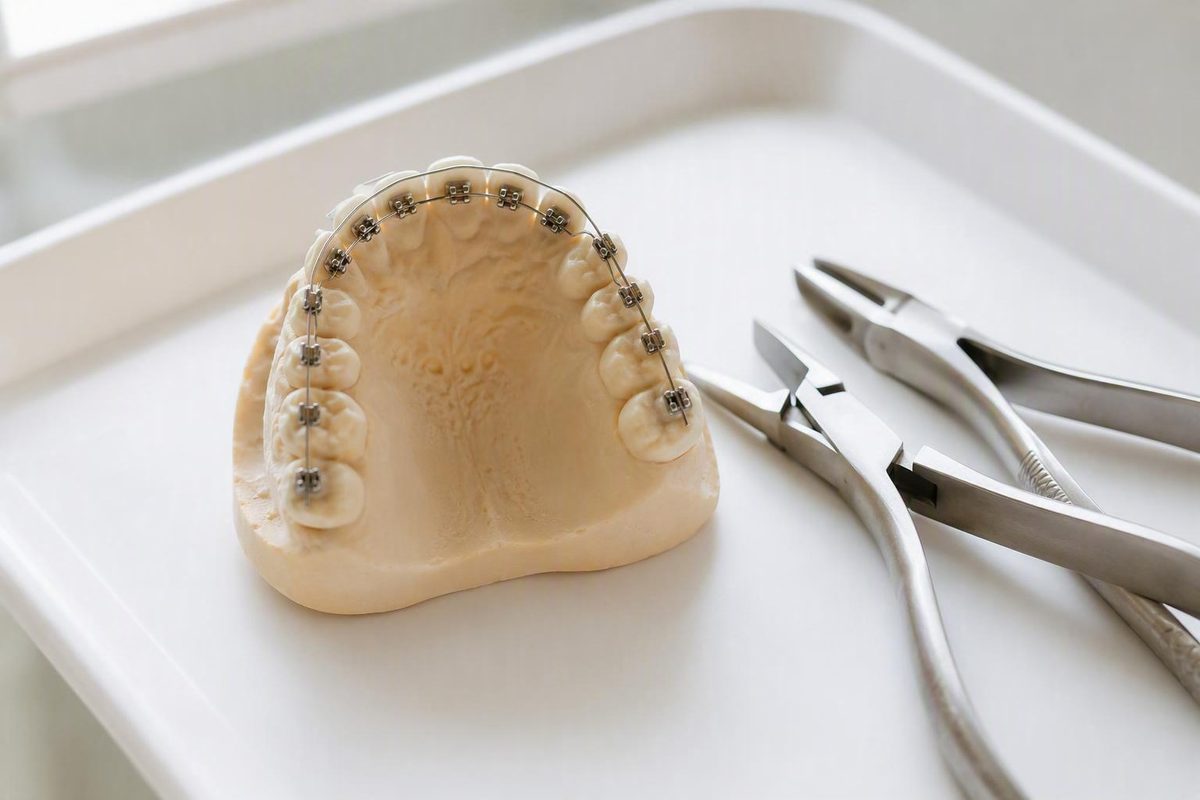
A practical U.S. starting budget for comprehensive children’s orthodontic treatment is about $3,000–$7,500 before insurance. This is a provider-reported planning range—not an independently verified national average, a guaranteed fee, or a substitute for an itemized local quote. The same child-focused provider estimate places Phase 1 treatment at approximately $2,000–$4,000 before insurance (Wax Orthodontics’ children’s cost guide). Complex treatment, multiple phases, additional appliances, and premium options such as lingual braces can push the total above $7,500.
The short answer: plan for roughly $3,000–$7,500 before insurance
The table below combines child-focused and general orthodontic estimates published by providers in different local markets. It is not nationally representative. Belle Mead Orthodontics reports ranges of $3,000–$7,500 for metal braces, $4,000–$8,500 for ceramic braces, $3,500–$8,500 for clear aligners, and $8,000–$13,000 for lingual braces in its New Jersey market (Belle Mead Orthodontics’ appliance estimates).
A separate provider guide reports a lower clear-aligner endpoint of approximately $3,000 and similarly identifies metal braces as the generally lower-priced option (Enjoy Orthodontics’ cost guide).
| Treatment or appliance | Approximate price before insurance | Budgeting context |
|---|---|---|
| Metal braces | $3,000–$7,500 | Most consistently lower-priced comprehensive option |
| Ceramic braces | $4,000–$8,500 | Often priced above metal braces |
| Clear aligners | $3,000–$8,500 | Especially wide provider-to-provider variation |
| Lingual braces | $8,000–$13,000+ | Premium option; some estimates are higher |
| Phase 1 treatment | $2,000–$4,000 | Targeted early care, not necessarily full treatment |
Every figure is approximate and before insurance. The ranges reflect different locations, treatment scopes, patients, and pricing methods. Clear-aligner and lingual-brace estimates vary particularly widely, so they should be treated as planning figures rather than a guaranteed price menu.
Across the supplied estimates, metal braces are the most consistently lower-priced comprehensive option. That does not make them right for every child. Appliance selection depends on the diagnosis, the movements required, dental development, and the treatment plan recommended by a qualified orthodontic professional.
Why two children can receive very different quotes
The appliance is only one component of the fee. Two children can both receive metal braces and still have substantially different quotes because the amount and complexity of care differ.
Principal price drivers include:
- Diagnosis and case complexity: More involved crowding, eruption problems, or bite correction may require additional planning or appliances.
- Expected treatment duration: A longer course may involve more appointments and clinical management.
- Appliance type: Metal, ceramic, lingual, and removable appliances have different price structures.
-
Number of treatment phases: Early treatment followed by comprehensive care creates two separate treatment periods.
-
Provider and treatment approach: Fees and available options vary among practices.
- Services bundled into the fee: One quote may be broadly inclusive, while another covers only the primary appliance and routine care.
Provider cost guides identify complexity, duration, appliance choice, location, clinician experience, and included services as factors affecting the final price. They also flag records, repairs, retainers, and treatment extensions as possible separate costs, depending on the practice (Belle Mead Orthodontics’ pricing-factor overview).
Distinguish an advertised appliance price from an all-in treatment fee. A low starting price does not reveal the family’s final responsibility. Ask whether the written quote accounts for:
- Consultation and treatment planning
- Photographs, scans, X-rays, and other diagnostic records
- Expanders or other planned appliances
- Routine adjustments
- Emergency visits and repairs
- Replacement aligners
- Treatment extensions or plan changes
- Initial retainers
- Retention appointments and monitoring
Do not assume that any of these services are included or excluded. Bundling is practice-specific, so compare the written financial agreements rather than headline prices.
Phase 1 and Phase 2 can change the total budget
Phase 1, also called early or interceptive treatment, is targeted care that generally begins while a child has a mixture of baby and permanent teeth. It may involve selected braces, an expander, or another appliance intended to address a developing problem.
Phase 2 is later comprehensive treatment. It generally begins after most or all permanent teeth have erupted and may use braces or clear aligners to complete tooth alignment and bite correction.
The American Association of Orthodontists describes these as separate stages timed to growth and dental development. It also emphasizes that two-phase treatment is not necessary for every child; many children can appropriately receive one comprehensive phase instead (AAO guide to two-phase treatment).
Provider estimates place Phase 1 at approximately $2,000–$4,000 before insurance. The AAO does not publish a Phase 1 price in its guidance, so that dollar range is a provider estimate rather than a professional-association benchmark.
Phase 1 may still be followed by a separately priced Phase 2. The available evidence does not establish that early treatment eliminates later comprehensive care or reduces the family’s combined cost.
Consider this explicitly hypothetical budget:
- Phase 1 treatment: $3,500
- Later Phase 2 treatment: $5,000
- Combined total: $8,500 before insurance
That is arithmetic, not a prediction. When evaluating a two-phase proposal, consider the clinical purpose of early treatment and the potential combined financial commitment.
The AAO recommends an orthodontic check-up when a problem is recognized and no later than age 7. That evaluation may result in no treatment, periodic monitoring, or early treatment—it does not mean every child should begin braces immediately.
Estimate what insurance could leave you to pay
Build an out-of-pocket estimate from three numbers:
- Total treatment fee
- Insurer’s confirmed estimated contribution
- Family’s remaining responsibility
Do not calculate the second number from a coverage percentage alone. Orthodontic benefits may be affected by deductibles, waiting periods, provider networks, age limits, exclusions, and lifetime orthodontic maximums. Provider insurance summaries particularly caution that a lifetime maximum can restrict the payment even when a plan advertises percentage-based coverage (Smiles and Grins’ explanation of orthodontic benefit limits).
For example:
- Total treatment fee: $6,000
- Applicable lifetime orthodontic benefit: $1,500
- Remaining balance: $4,500 before deductibles or excluded charges
Even if the plan is described as covering 50%, the payment would not exceed $1,500 in this hypothetical example if that lifetime cap applies. A percentage alone is therefore insufficient for budgeting.
Before accepting treatment, ask the insurer for benefit information based on the proposed provider and treatment. Ask the orthodontic office to explain how it calculated its estimated insurance credit. Confirm:
- Whether the provider is in network
- Whether orthodontics is covered for your child
- Whether a deductible applies
- Any waiting period or age limit
- The lifetime maximum and the amount already used
- Whether the proposed appliance or service is excluded
- Whether benefits are paid upfront or over time
- What happens to the account if coverage changes
Treat the office’s insurance credit as an estimate until the plan applies its terms to the claim. If the insurer ultimately pays less than estimated, ask the office how the difference will be handled.
Ways to pay or spread out the remaining balance
Depending on the practice, plan, and eligibility rules, families may have access to in-house installments, third-party financing, HSA or FSA funds, pay-in-full discounts, or supervised university clinics. The same provider guidance notes that Medicaid orthodontic benefits vary by state and may cover qualifying medically necessary care rather than treatment sought only for cosmetic reasons (Enjoy Orthodontics’ payment and Medicaid overview).
Possible payment tools include:
- In-house installments: The office divides the balance across a defined payment period, potentially with a down payment.
- Third-party financing: A lender or healthcare credit provider finances the bill under a separate agreement.
- HSA or FSA funds: Eligible families may be able to use available tax-advantaged account funds for qualifying expenses.
- Pay-in-full discounts: Some practices may offer a discount for upfront payment.
- University or teaching clinics: Supervised training programs may provide another pricing option, although availability and scheduling can differ.
For a simple illustration, a $4,500 balance divided over 18 months equals $250 per month before any interest, fees, or required down payment.
Do not compare financing offers by monthly payment alone. Ask for:
- Annual percentage rate
- Total finance charge
- Application or account fees
- Required down payment
- Promotional deadline and conditions
- Consequences of late or missed payments
- Total amount paid over the full term
If a promotion depends on paying the balance within a specified period, obtain the exact terms in writing before choosing it.
For Medicaid, contact the state Medicaid agency or managed-care plan directly. Ask about current medical-necessity criteria, age restrictions, participating providers, documentation requirements, approval procedures, and available appeal steps. Eligibility alone does not establish that a proposed orthodontic treatment will be approved.
Use this checklist to compare written orthodontic quotes
A useful quote defines both the proposed care and the family’s financial responsibility. Apply the same questions to every office so that you are comparing like with like.
Treatment scope
- What diagnosis is the treatment intended to address?
- Which appliance or appliances are included?
- Does the fee cover every planned appliance, such as an expander?
- Is this one comprehensive phase or the first part of a two-phase plan?
- What clinical finding makes early treatment advisable now?
Records, visits, and changes
- Is the consultation included?
- Are photographs, scans, X-rays, and other diagnostic records included?
- Are routine adjustments included?
- Are emergency visits and repairs included?
- Are replacement aligners included, and is there a limit?
- Is the fee fixed for the proposed course?
- Can the fee increase if treatment lasts longer than expected?
- What counts as an extension or change in treatment?
Retention and follow-up
- Are initial retainers included?
- What type and how many sets are included?
- Are post-treatment monitoring visits included?
- How long does included follow-up last?
- What will replacement retainers cost?
Insurance and payment
- How much is due upfront?
- What amount is being estimated from insurance?
- Will insurance payments be credited directly to the account?
- What happens if the insurer pays less than estimated?
- What is the total monthly-plan cost after interest and fees?
- Does a promotional deadline apply?
- What happens if a payment is late?
For a two-phase recommendation, request a separate written estimate for Phase 1 and a realistic planning estimate for likely Phase 2. Ask what the first phase is intended to accomplish, how progress will be evaluated, and which findings would lead to later comprehensive treatment.
The lowest headline quote is not automatically the lowest total cost. A cheaper quote may cost more overall if retainers, repairs, appliances, or follow-up are billed separately while another practice includes them in one fee.
Use this three-step plan:
- Obtain itemized local estimates based on your child’s diagnosis.
- Confirm insurance details directly with the insurer and orthodontic office.
- Make appliance and timing decisions with a qualified orthodontic professional, considering clinical fit and total cost.
Start with $3,000–$7,500 before insurance, then replace that rough planning figure with an itemized local quote and confirmed benefit information. Compare the family’s total responsibility across all phases, appliances, visits, retainers, financing charges, and follow-up—not merely the advertised price of braces.
Aligner Source provides source-attributed general orthodontic information, not clinical care or individualized treatment advice. Treatment decisions should be made with a qualified orthodontic professional.