
What a Palate Expander Costs and What Changes the Price
A child's appliance-only rapid palatal expander may be $1,000–$2,500, while a fuller Phase 1 plan may be $2,000–$3,800. Check what each quote includes.
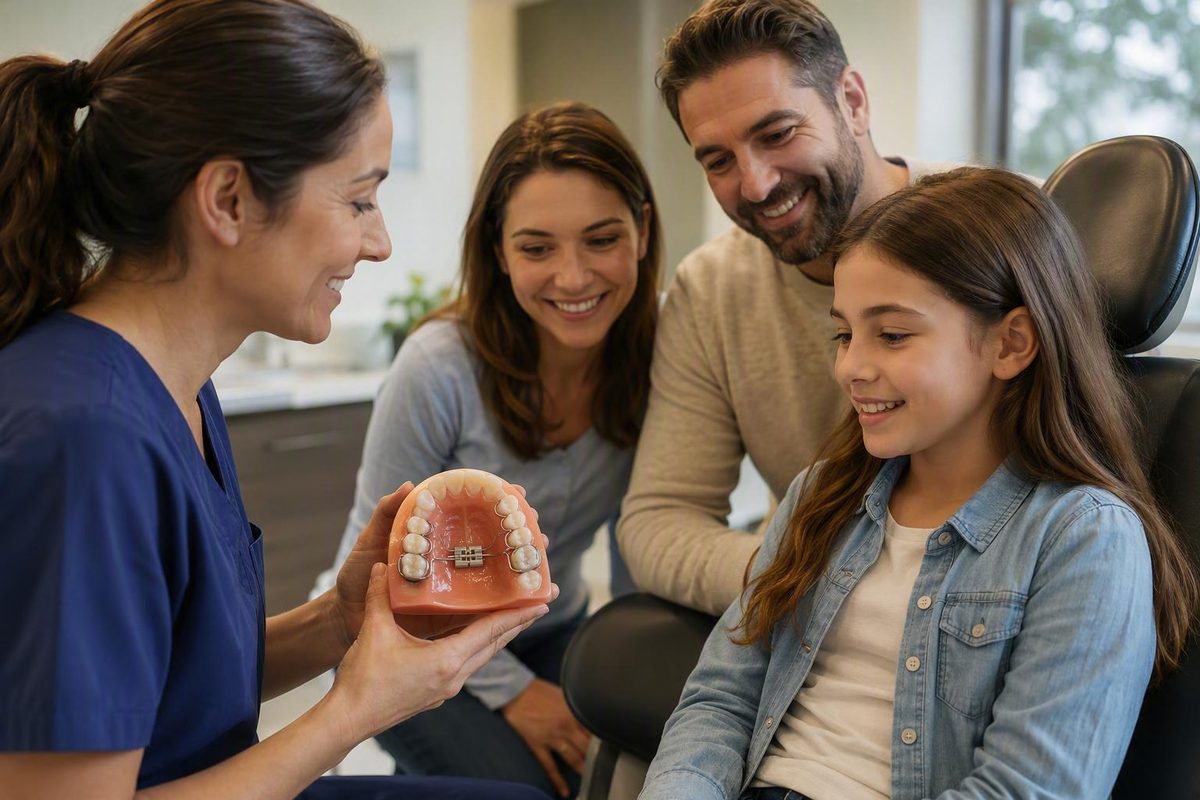
Provider-published U.S. estimates commonly place a child’s palate expander or related treatment at roughly $1,000 to $3,000. This is a planning benchmark assembled from commercial provider estimates—not a verified national average, guaranteed local price, or necessarily an all-inclusive treatment fee. Parsons Orthodontics publishes a $1,000–$3,000 estimate and describes possible inclusions.
The more useful question is: What will the complete treatment cost after excluded services, insurance limits, possible later orthodontic work, and financing charges are included?
This guide separates those figures so you can compare estimates on the same basis.
Pricing reviewed August 2026. All dollar amounts are U.S. dollars unless otherwise stated.
The short answer: common palate-expander price ranges
A palate expander, also called a palatal expander, is a custom orthodontic appliance used to widen the upper arch or jaw according to the prescribed treatment method. It is most commonly associated with childhood treatment, although some adults also have expansion options. An orthodontist must evaluate the patient to determine whether expansion is appropriate and which approach fits the case.
The table keeps patient groups and scopes of care separate. Combining them into one average would conceal the difference between an appliance-only price, a broader early-treatment package, and complex adult care.
| U.S. treatment category | Rough provider-published estimate | What the figure may represent |
|---|---|---|
| Child rapid palatal expander, appliance only | $1,000–$2,500 | The custom appliance; monitoring, removal, or retention may cost extra |
| Fuller child Phase 1 expansion plan | $2,000–$3,800 | Expansion, monitoring, and a retention phase, depending on the provider |
| Some adult expansion approaches | $3,500–$6,000 | A limited Connecticut provider estimate; not a universal nonsurgical or miniscrew-assisted price |
| Adult surgically assisted expansion | $5,000–$10,000+ | Potential orthodontic, surgical, facility, and anesthesia charges |
Evidence note: The appliance-only, fuller Phase 1, and surgically assisted ranges come from a dental cost guide reviewed in June 2026. Its underlying records are not identified in enough detail to establish a definitive national price, so the figures should be treated as planning ranges. See its RPE, Phase 1, and SARPE estimates. The adult nonsurgical figure comes from a Connecticut orthodontic practice that publishes separate child and adult estimates. Greater Hartford Orthodontics reports the $3,500–$6,000 adult range.
A local figure can also sit near or above the upper end of the commonly quoted child benchmark. For example, a Minnesota practice publishes a range of $2,900 to $3,300 but does not clearly identify every included service. This demonstrates that at least one local provider quotes above much of the broader child range; it does not establish why that practice’s price differs. Signature Smiles reports its Minnesota estimate.
These ranges answer only the first budgeting question. Before agreeing to treatment, separate four figures:
- Sticker price: the number shown on the orthodontist’s estimate.
- Excluded add-ons: records, visits, repairs, retention, or later care not included in that number.
- Estimated insurance payment: what the plan may pay after its eligibility rules and limits are applied.
- Expected patient responsibility: the remaining treatment cost, including any financing charges.
Appliance price versus the complete Phase 1 bill
One may quote only the custom appliance, while another may provide a bundled fee covering the device and months of professional services.
A palate-expander estimate generally represents one of three scopes:
- Appliance only: fabrication of the custom device and possibly its initial fitting.
- Active expansion care: the appliance, fitting, activation instructions, adjustments, and monitoring during expansion.
- Complete Phase 1 package: active expansion, continued monitoring, removal, stabilization or retention, and potentially a separate retainer.
That difference explains how an appliance-only child rapid palatal expander can be estimated at $1,000 to $2,500, while a fuller Phase 1 plan can be estimated at $2,000 to $3,800. The higher figure may not represent a more expensive version of the same purchase; it may cover substantially more care, as shown in the cited comparison table above.
What to look for in the written estimate
Ask the practice to mark each item as included, excluded, or priced only if needed:
- Initial examination or consultation
- Diagnosis and treatment planning
- Photographs and other records
- X-rays, digital scans, or other imaging
- Physical or digital impressions
- Appliance design and fabrication
- Delivery and fitting
- Activation key and caregiver instructions
- Activation or adjustment appointments
- Routine monitoring visits
- Emergency visits
- Repairs
- Replacement after damage or loss
- Appliance removal
- Stabilization and retention
- A separate post-treatment retainer
- Follow-up visits after removal
Do not infer the answers from a heading such as “palate expander treatment.” Ask for the inclusions and exclusions in writing.
Parsons Orthodontics says its $1,000 to $3,000 estimate typically covers evaluation, custom device creation, fitting, adjustments, and follow-up monitoring. Other published pages do not define their packages as clearly, which prevents direct comparison based on headline prices alone.
A Pennsylvania practice gives examples of potentially separate charges: $100 to $250 for an initial consultation, $50 to $150 per follow-up visit, and $200 to $600 for a post-treatment retainer. These are commercially published examples from one practice, not national fee norms; another provider may bundle some or all of them. Sencak Orthodontics lists these possible component charges.
Treatment time and billing time are not the same
Active widening may take only a few weeks, but that is not necessarily the end of treatment. The appliance may remain in place while the result stabilizes, and monitoring can continue for several months.
One provider describes active widening as lasting approximately two to four weeks, with the appliance remaining in place for roughly six to twelve months in total. The actual schedule depends on the patient and treatment plan. Becker Orthodontics describes these active and stabilization periods.
A longer timeline does not automatically mean a higher bill. If routine visits are included in a fixed Phase 1 fee, additional months may not change the price. If monitoring is billed appointment by appointment—or if the contract permits added charges for extended care—duration and visit frequency can affect the total.
Scope warning: A lower appliance-only quote can cost more overall than a higher all-inclusive quote once examinations, imaging, monitoring, removal, and retention are added.
Ask the practice to complete this sentence in writing:
“This fee covers treatment from ___ through ___ and includes ___ routine visits.”
That question can expose a significant difference between apparently similar offers.
Why child and adult expansion costs are different
The common $1,000 to $3,000 benchmark primarily reflects treatment for children and should not automatically be used to budget for adult care.
Provider descriptions generally associate conventional expansion with childhood, while the jaw is still developing. Adult cases may require a different appliance or a more complex plan, potentially including miniscrew assistance or surgically assisted treatment. That does not mean every adult needs surgery.
Treatment selection may depend on:
- Skeletal maturity
- Jaw and dental anatomy
- The amount and type of expansion required
- Tooth and supporting-tissue considerations
- Bite and alignment goals
- Previous orthodontic or surgical care
- The treating orthodontist’s assessment
A Connecticut provider estimates some adult expansion treatment at $3,500 to $6,000, but it does not establish a price for every nonsurgical technique or miniscrew-assisted case. A particular patient’s complete plan may cost less or more.
For surgically assisted rapid palatal expansion, the available cost guide gives a rough range of $5,000 to $10,000 or more. This is a limited planning estimate rather than a guaranteed adult price, and the total may include multiple independently billed components. The cited cost guide describes the range and its potential billing components.
A surgical estimate may actually be several estimates
For surgically assisted treatment, request separate written figures for:
- Orthodontist: treatment planning, appliances, preparation, monitoring, and retention
- Oral or maxillofacial surgeon: surgical evaluation and procedure
- Facility: hospital or outpatient facility charges
- Anesthesia: anesthesia professional and related services
- Follow-up care: postoperative visits, imaging, and any additional treatment
Different organizations may issue these bills. The surgical and orthodontic portions may also be considered under different medical or dental insurance provisions, depending on the specific policies and services. Approval of one component should not be treated as approval of every other component.
Australian estimates are not included in the U.S. table. Converting Australian dollars to U.S. dollars would change the currency but would not account for differences in healthcare markets, professional fees, insurance arrangements, or package inclusions.
The practical rule is simple: use child appliance ranges only as a starting point for child care, and obtain a case-specific estimate for adult treatment.
The factors that move your quote up or down
Palate-expander treatment is not a standardized retail purchase. The device is custom-made, while the larger bill may also cover diagnosis, professional supervision, appointments, and retention.
The main cost drivers fall into four groups.
Patient factors
Age and skeletal maturity: Growing children and skeletally mature adults may have different treatment options. Age alone does not determine the method.
Amount of expansion: A limited correction may require a different plan from a substantial correction.
Case complexity: Bite relationships, crowding, impacted teeth, previous treatment, asymmetry, and other clinical considerations can affect the work involved.
Additional procedures: Extractions, periodontal care, surgery, restorative treatment, or other recommended services may be billed separately. Their need and cost cannot be predicted from a general expander range.
Appliance factors
The broad category “palate expander” can include:
- Fixed appliances
- Removable appliances
- Traditional rapid palatal expansion
- Advanced or miniscrew-assisted treatment
- Sequential or aligner-based expansion
- Surgically assisted expansion
There is no supported universal price for each label. Practices may use similar terms for plans with different services, and the device itself may represent only one part of the fee.
Removable options can also create distinct financial questions. Ask what happens if the appliance is lost, damaged, or no longer fits as planned. For any design, clarify whether repairs and remakes are included.
Provider and market factors
The estimate may vary with:
- Geographic area
- Local operating expenses
- The clinician’s fees and experience
- Laboratory or manufacturing costs
- The practice’s appointment model
- Whether one clinician manages the entire case
- Whether other dentists, surgeons, or facilities participate
Current written estimates from nearby providers are therefore more useful for local budgeting than a broad web range. Provider pages commonly identify appliance type, complexity, geography, clinician fees, and additional treatment as price variables, but their methodologies are generally unclear. Actual local charges may fall below or above every range in this guide. Silver Lake Orthodontics summarizes several commonly cited cost factors.
Treatment-scope factors
One fee may cover fabrication and fitting only; another may include records, all routine monitoring, removal, retention, and a retainer.
Look specifically for:
- Examination and diagnostic records
- Imaging and impressions
- Appliance fabrication
- Number and frequency of visits
- Adjustments and activation checks
- Emergency appointments
- Repairs and replacement
- Removal
- Retention
- Post-treatment retainer
- Transition to later orthodontic treatment
Also ask whether the price is flat or itemized. Treatment duration can increase the cost when visits are billed separately. It may not affect a bundled fee unless the agreement permits additional charges for extended or unusually complex care.
Two headline quotes are meaningfully comparable only when they cover:
- The same proposed treatment method
- The same professional services
- The same treatment period
- The same number or category of visits
- The same removal and retention care
- The same repair, replacement, and extended-treatment policies
Without those details, comparing a $2,000 quote with a $3,000 quote may mean comparing one component with an entire service.
Costs that may come after the expander
Expansion and tooth alignment are related but distinct parts of orthodontic treatment. Depending on the method and patient, expansion changes the width of the upper arch or jaw, while braces or aligners are generally used to reposition teeth. A patient may need one form of treatment, the other, or both.
Do not assume that a palate-expander quote includes later braces or clear aligners.
Expansion is often billed as early or Phase 1 treatment. If comprehensive alignment is later recommended, it may be called Phase 2 and may carry a separate treatment plan and fee. Becker Orthodontics describes a child’s expander as Phase 1 care that is generally separate from later braces.
Nor should you assume expansion will eliminate, shorten, or reduce the cost of later treatment. The eventual plan depends on development and on what alignment or bite correction remains necessary.
Potential expenses after or beyond expansion
A longer-term budget may need to include:
- Braces or clear aligners
- A post-expansion retainer
- Replacement retainers
- Continued monitoring
- Appliance repairs
- Replacement after damage or loss
- Additional records or imaging
- Procedures added if the case changes
- Extended treatment beyond the original schedule
Request a separate written estimate for anticipated Phase 2 treatment. A precise figure may not be possible years in advance, but the practice should explain whether later care is expected and how its price will be determined.
Ask:
- Is Phase 2 anticipated, optional, or not yet predictable?
- Does the Phase 1 payment receive any credit toward later care?
- Is that credit a fixed dollar amount or a percentage?
- Does the retention phase include a separate retainer?
- Are any retainer repairs or replacements included?
- How long does included monitoring continue?
- What happens financially if treatment takes longer than planned?
- Would Phase 2 draw from the same insurance lifetime orthodontic maximum?
If you are comparing possible later appliances, Aligner Source’s guide to braces and aligner types can help organize questions about visibility, upkeep, and everyday trade-offs. Its braces figures are not evidence for palate-expander prices.
For budgeting purposes, treat Phase 1 expansion and possible Phase 2 alignment as two potential financial commitments unless the written agreement says otherwise.
How insurance can change the out-of-pocket cost
Dental insurance with orthodontic benefits may pay part of eligible palate-expander treatment, but coverage is not guaranteed. The presence of “orthodontic coverage” in a plan summary does not show what the insurer will pay for a particular patient or service.
Verify:
- Whether orthodontic care is covered
- Whether an age limit applies
- Whether there is a waiting period
- The applicable deductible
- Which services or billing codes are eligible
- In-network and out-of-network rules
- Exclusions for appliances, early treatment, or retreatment
- Any medical-necessity criteria
- Required diagnostic records
- Referral or preauthorization requirements
- How and when the plan makes payments
- The original and remaining lifetime orthodontic maximum
- Whether Phase 1 and Phase 2 use the same maximum
Medical necessity may support a claim, but it does not compel payment. Eligibility, exclusions, documentation rules, deductibles, allowed charges, and dollar limits depend on the insurance contract.
Commercial provider pages sometimes report possible coverage of 30% to 50% and lifetime orthodontic maximums around $1,000 to $2,000. These are examples in provider-published material, not benefits that should be assumed across the market. Becker Orthodontics discusses these example percentages and lifetime limits.
Why the dollar maximum can matter more than the percentage
A plan may describe its orthodontic benefit as 50% of eligible charges. That does not necessarily mean it will pay half of the orthodontist’s estimate. Payment may stop at the remaining lifetime maximum, and other plan rules can reduce the amount further.
Hypothetical 1: $2,500 treatment with up to $1,000 remaining
Assume the complete $2,500 fee is eligible and no more than $1,000 remains under the lifetime orthodontic benefit.
Even if the maximum amount were paid, the patient would owe at least $1,500.
The $1,000 is only the maximum potentially available in this illustration—not a promised payment. The insurer could pay less after applying its benefit percentage, allowed fee, deductible, exclusions, or payment schedule.
A second illustration shows why the percentage alone is insufficient:
Hypothetical 2: 50% benefit limited by an $800 maximum
Fifty percent of a $3,000 eligible fee is $1,500. If only $800 remains under the lifetime maximum, however, the illustrative insurer payment cannot exceed $800.
The patient would face at least $2,200, before any deductible, exclusion, noncovered service, or charge above the plan’s allowed amount.
These are arithmetic examples, not predictions of what a particular plan will pay.
A short insurer call script
Use the following script when calling the number on the insurance card:
“My orthodontist has recommended palatal expansion as Phase 1 orthodontic treatment. Does my plan cover the proposed services, and what is the remaining lifetime orthodontic maximum? What deductible applies? Are there age limits, waiting periods, network restrictions, exclusions, or medical-necessity requirements? What records and billing codes are required for an estimate or preauthorization? Based on the proposed fee, what is the estimated plan payment? Would later Phase 2 braces or aligners draw from the same maximum?”
Then request:
- A call reference number
- The representative’s name or identifier
- A written benefit estimate
- Written preauthorization requirements
- A copy or location of the relevant plan language
Ask the orthodontic office to submit the proposed treatment, codes, records, and fee for preauthorization when the plan permits it. A dental cost guide also recommends obtaining an itemized quote and requesting preauthorization, while cautioning that coverage depends on plan terms and benefit limits.
Ask the insurer what conditions could change the final benefit, including continued eligibility, the services ultimately delivered, claim coding, and applicable plan provisions.
Ways to pay—and how to compare financing offers
After estimated insurance is subtracted, patients may use one or more methods to manage the remaining balance. Availability and terms vary by provider and patient.
Possible options include:
- Eligible Health Savings Account funds
- Eligible Flexible Spending Account funds
- An in-house installment plan
- Third-party healthcare financing
- A credit card or personal loan
- A possible pay-in-full discount
- A possible family or sibling discount
Not every practice offers these arrangements, and the evidence pack does not establish that every expander-related charge qualifies for tax-advantaged payment. Confirm HSA or FSA eligibility with the account administrator and, when appropriate, a qualified tax professional.
Some patients may be able to combine insurance, eligible HSA or FSA funds, and a payment plan. Confirm coordination rules with the insurer, account administrator, financing company, and orthodontic practice before committing. Provider pages list these as possible payment methods rather than universal benefits.
Compare total repayment, not just the monthly payment
A low monthly payment can result from a long repayment period rather than a low treatment cost. Financing spreads the bill over time and may increase the total amount paid through interest or fees.
Request these terms in writing:
- Required down payment
- Amount financed
- Number of payments
- Repayment term
- Annual interest rate
- Whether interest is deferred
- What triggers deferred or retroactive interest
- Origination or administrative fees
- Account maintenance fees
- Late-payment and returned-payment fees
- Autopay requirements
- Early-payoff rules or penalties
- Whether the treatment price changes when financing is used
- What happens if treatment stops early
- What happens if care transfers to another practice
Some commercial provider examples describe payment plans lasting 12 to 24 months, but this is not a universal term and says nothing about the interest rate or total cost of a specific offer. Silver Lake Orthodontics provides one such payment-plan example.
Use a simple table to compare offers:
| Financing offer | Down payment | Monthly payment × term | Interest and fees | Total repayment |
|---|---|---|---|---|
| Practice plan | Enter amount | Enter calculation | Enter amount | Add all payments |
| Third-party plan | Enter amount | Enter calculation | Enter amount | Add all payments |
| Credit or loan option | Enter amount | Enter calculation | Enter amount | Add all payments |
A pay-in-full discount is not automatically the best choice. Compare the discount with:
- The value of preserving emergency cash
- The cost of borrowing the money
- Interest the cash could otherwise earn
- The risk of paying before treatment is completed
- Refund provisions if the plan changes
If paying in full would exhaust necessary savings or create high-interest debt elsewhere, the discount may not justify the trade-off.
A checklist for comparing orthodontic estimates
When practical, obtain two or three current, written, itemized local estimates for the same proposed scope of care. The purpose is not to reduce a clinical decision to a price auction. It is to understand what each treatment plan includes and what you may actually owe.
If orthodontists recommend substantially different methods, ask each to explain:
- The clinical objective
- The anticipated treatment sequence
- Reasonable alternatives
- What would trigger additional treatment
- Which services are included in the quoted fee
Prices for unlike plans should not be compared as if the provider were the only difference.
Palate-expander estimate worksheet
Use one column for each practice:
| Cost or contract item | Practice A | Practice B | Practice C |
|---|---|---|---|
| Examination and treatment planning | |||
| Photographs and records | |||
| X-rays or scans | |||
| Impressions | |||
| Appliance fabrication | |||
| Fitting and delivery | |||
| Activation instructions | |||
| Activation or adjustment visits | |||
| Routine monitoring | |||
| Emergency visits | |||
| Repairs | |||
| Replacement appliance | |||
| Removal | |||
| Retention phase | |||
| Retainer | |||
| Retainer replacement | |||
| Anticipated Phase 2 treatment | |||
| Total quoted treatment fee | |||
| Estimated insurance payment | |||
| Estimated patient responsibility | |||
| Interest and financing fees | |||
| Total expected repayment |
Record the answers to these contract questions as well:
- Is the fee fixed, or can it change?
- What circumstances permit an additional charge?
- What happens if treatment takes longer than expected?
- How many visits are included?
- How long is the estimate valid?
- Will the practice seek preauthorization before treatment?
- Which services are expressly excluded?
- How are emergency appointments billed?
- Who pays if the appliance must be repaired or remade?
- What happens if it is lost?
- Is removal included?
- Does retention include a separate retainer?
- Is any Phase 1 payment credited toward Phase 2?
- What refund or transfer policy applies if care ends early?
For an adult surgical case, request separate estimates for:
- Orthodontic preparation and follow-up
- The surgeon’s professional fee
- The facility
- Anesthesia
- Imaging and records
- Postoperative care
- Retention
- Any later alignment treatment
Then ask whether dental and medical insurance may apply to different portions. Obtain separate benefit reviews when necessary instead of assuming one policy will cover the complete bill.
How a higher quote can represent better value
Imagine one practice quotes $2,000 for an appliance but excludes records, monitoring, removal, and retention. Another quotes $3,000 and includes all those services.
The $3,000 plan could cost less overall if the excluded services under the $2,000 offer exceed the $1,000 difference. This is a comparison principle, not a claim that either amount represents a market price.
Use this calculation:
Quoted fee + expected excluded services − estimated insurance payment + financing charges = expected patient cost
Price should not decide treatment by itself. The proposed clinical method, professional oversight, appointment convenience, communication, and policies for complications or extended care also matter.
The decision rule is to compare clinical scope, expected patient responsibility, and total financing cost—not merely the appliance line item.
Frequently asked questions
How much does a palate expander cost without insurance?
For a child, provider-published U.S. estimates commonly place an appliance or related treatment around $1,000 to $3,000. A Colorado practice, for example, publishes a narrower rapid-palatal-expander estimate of $1,500 to $2,500, while noting that actual cost depends on the required expansion. 20 Mile Orthodontics publishes that local estimate.
Without insurance, budget for the contracted treatment fee plus any excluded services. Check whether the estimate covers records, fitting, monitoring, repairs, removal, retention, and a retainer. Adults should obtain a case-specific estimate rather than relying on the child range.
Does dental insurance cover a palate expander?
It may. Coverage depends on the individual policy, patient eligibility, covered services, network rules, deductibles, exclusions, preauthorization requirements, and remaining lifetime orthodontic maximum.
Medical necessity can support a claim but does not guarantee payment. Request a written benefit estimate or preauthorization and ask what conditions could change the final payment.
Are braces included in the cost of a palate expander?
Not necessarily. Expansion is often treated as Phase 1 care, while later braces or aligners may be planned and priced separately.
Ask whether Phase 2 is anticipated and whether any amount paid for Phase 1 will be credited toward it. Do not assume expansion will eliminate or reduce the cost of later alignment treatment.
Why does palatal expansion usually cost more for adults?
Adult cases may require a different or more complex treatment method because skeletal maturity and anatomy influence the available options. A provider-published estimate places some adult approaches at $3,500 to $6,000, but that range is local and does not apply to every adult technique or patient. Greater Hartford Orthodontics publishes the child and adult comparison.
Some adults may be evaluated for surgically assisted care, which can generate separate orthodontist, surgeon, facility, and anesthesia bills. Not every adult needs surgery; an orthodontist must determine the appropriate options.
How long is a palate expander worn, and does treatment time affect the price?
Active widening may take a few weeks, while stabilization and monitoring can continue for several months. A Colorado provider describes a general wear period of six months to one year, depending on age and the amount of expansion required.
Treatment time can affect the price when appointments are billed separately or the contract permits charges for extended care. It may not change a fixed fee that includes routine monitoring.
Ask how many visits are included, when additional charges begin, and what happens financially if treatment lasts longer than expected.
The bottom line
For many childhood cases, $1,000 to $3,000 remains a useful provider-reported starting benchmark, but it is not a dependable all-in quote. One Minnesota practice’s $2,900 to $3,300 local estimate also shows that published prices can approach or exceed the top of that broader range without clearly disclosing every inclusion.
The decisive numbers are:
- The complete scope of care
- Expected excluded charges
- The insurer’s estimated payment and remaining benefit
- Possible Phase 2 expenses
- Interest and financing fees
- Total expected patient responsibility
Compare itemized local estimates on the same basis, verify insurance information in writing, and let an orthodontist determine the clinically appropriate treatment rather than selecting an appliance by price alone.
This article provides general educational information and does not replace orthodontist-led diagnosis or treatment planning. Aligner Source’s terms state that orthodontic treatment decisions belong with the treating orthodontist.