
How Long It Takes to Put Braces On: What Changes the Time
Reserve roughly two hours unless your clinic gives a closer estimate. One or both arches, bracket type and added appliances can change the fitting time.
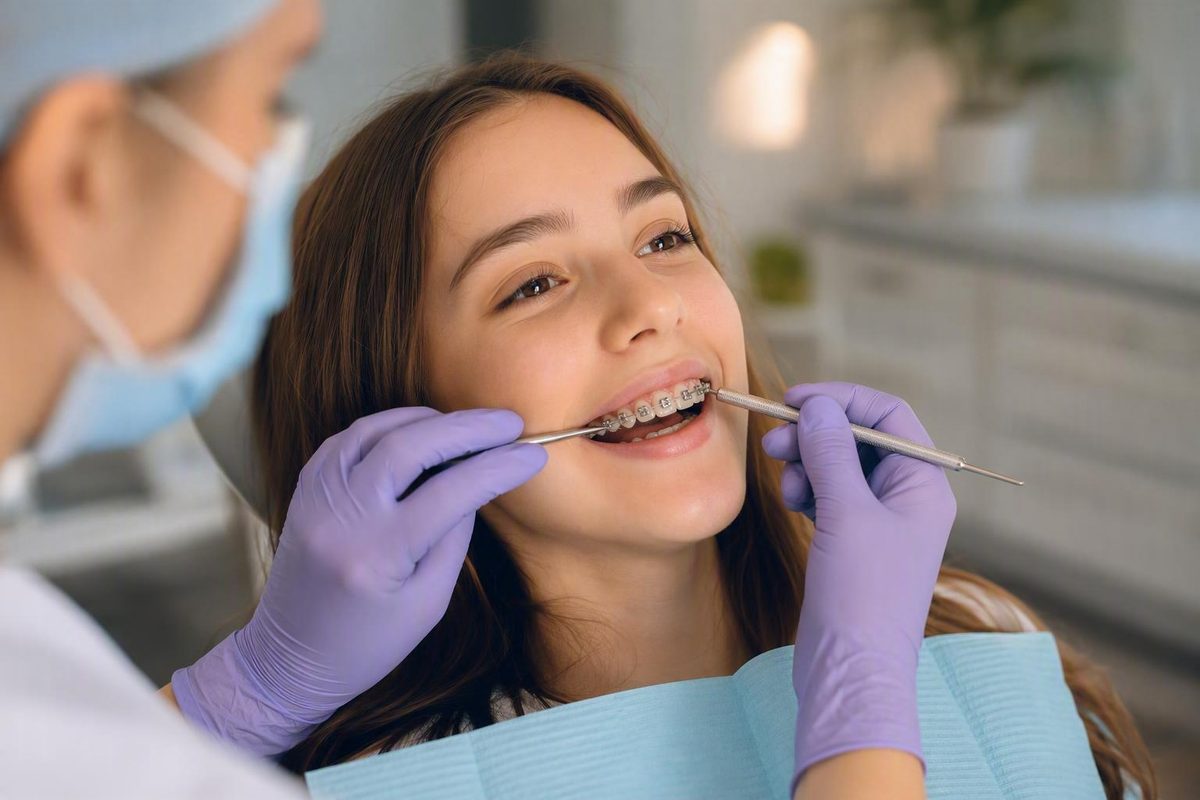
The short answer: reserve about two hours
Putting on fixed braces commonly takes about one to two hours, according to commercial oral-care and orthodontic-provider sources. Oral-B gives that general range for most metal and ceramic braces (see its braces-placement overview).
For a straightforward fitting, 60–90 minutes is also frequently reported, while a more complex appointment may approach two hours (see the orthodontic provider’s estimate).
For practical scheduling, consider keeping roughly two hours free unless your clinic gives you a more specific arrival and departure time. That allows room for:
- Check-in and preparation
- Cleaning and isolating the teeth
- Bracket bonding
- Archwire placement
- Final checks and minor adjustments
- Care instructions
- Questions before you leave
This is planning guidance, not a guaranteed duration. Office workflows differ, and your appointment may involve one or both arches, more or fewer teeth, molar bands, a particular bracket system, or another appliance.
The estimate also generally refers to the bonding appointment itself, not every step required to begin orthodontic treatment. Consultation, X-rays, photographs, scans, treatment planning, spacers, extractions, fillings, or professional cleaning may take place at separate visits.
Before blocking out your day, ask whether the orthodontist plans to fit:
- Both upper and lower braces
- Only one arch
- Brackets alone or brackets plus bands or another appliance
- Conventional front-facing braces or lingual braces behind the teeth
- Any components requiring additional preparation
If upper and lower braces will be fitted on different days, neither appointment may match the typical estimate for a complete fitting.
It is also important to understand the evidence behind these figures. The available timing estimates come largely from orthodontic practices, dental providers, and commercial oral-care publishers. They are not an independent professional timing standard or a conclusion established by comparative clinical research. They can help with planning, but the appointment length supplied by your own clinic is more relevant to your case.
Practical answer: Expect the fitting to occupy a substantial appointment block, and reserve about two hours if the office has not provided a more precise estimate.
What happens during those one to two hours
A braces-fitting appointment takes time because the orthodontic team must prepare the teeth, keep the bonding area dry, and position multiple brackets carefully. The length reflects precision and repeated individual placement—not an invasive surgical procedure.
The exact sequence varies by office and bracket system, but a conventional fixed-braces fitting commonly includes the following stages.
1. Cleaning the teeth
The surfaces receiving brackets must be clean. The orthodontic team may polish the teeth to remove plaque or surface residue that could interfere with bonding.
This appointment cleaning is not necessarily a substitute for a separate professional cleaning. If cavities, gum inflammation, or other oral-health concerns require treatment, the orthodontist may ask for that work to be completed before braces are fitted.
2. Drying and isolating the working area
The teeth need to remain dry while the brackets are bonded. A cheek retractor may be used to hold the lips and cheeks away from the teeth, giving the team a clear view and helping prevent saliva from reaching the working surfaces.
The retractor and extended mouth opening may feel awkward. Some patients notice stretching, dryness, or jaw fatigue even when the bonding procedure itself is comfortable.
3. Preparing the tooth surfaces
The team conditions the areas that will receive brackets and applies the required primer or bonding material. Routine bracket placement ordinarily does not involve drilling into the teeth, although conditioning prepares the enamel surface so the adhesive can bond effectively.
Moisture control matters during this stage. If saliva reaches a prepared surface at the wrong time, the area may have to be dried or prepared again.
4. Positioning and bonding the brackets
A bracket is placed on each selected tooth and aligned according to the treatment plan. Excess bonding material is removed, and the adhesive is hardened with a curing light.
This generally accounts for a substantial share of the appointment because every bracket must be positioned individually. Small differences in bracket position can influence how the connected archwire directs a tooth.
One promotional orthodontic-practice walkthrough reports that a complete fitting may involve 20–28 brackets, depending on the treatment plan. Its example workflow allocates 5–10 minutes to cleaning and drying, 30–45 minutes to bracket bonding, and 10–15 minutes to archwire placement, with the remaining time used for preparation, checks, and instructions. The same practice estimates 30–45 minutes for upper-only braces. These are examples from one provider’s workflow, not universal standards (review the practice’s step-by-step breakdown).
5. Curing and checking the bonds
After the adhesive is cured, the team checks that the brackets are secure and positioned as intended. A bracket may occasionally need to be removed and repositioned before the appointment continues.
Correcting a bracket at this stage may add time, but careful placement is more important than finishing within a particular minute-by-minute target.
6. Inserting the archwire
Once the brackets are secure, an archwire is placed through or into them. Depending on the system, it may be held in place with small elastic ties, built-in clips, or another securing mechanism.
The archwire connects the individual brackets into an active orthodontic appliance. Bands or other prescribed components may also be added during this stage.
7. Completing final checks
The orthodontist or clinical team checks the bracket positions, wire ends, and overall fit. A wire that extends too far at the back may be trimmed or adjusted before you leave.
An office may also perform other case-specific checks based on the appliance and treatment plan. Tell the team before leaving if an area feels unusually sharp or irritating.
8. Explaining care and next steps
The final part of the appointment commonly covers brushing, flossing, food choices, orthodontic wax, broken-bracket procedures, and the timing of the next visit. If your treatment includes elastics or special cleaning tools, the team may demonstrate how to use them.
Instruction time remains important even after the braces are attached. Ask for clarification or a demonstration if you are unsure how to clean around the brackets or what to do if something breaks.
Overall, the appointment length reflects moisture control, repeated bracket placement, careful positioning, and final verification. Different offices may divide the time differently, and some bracket systems alter individual steps.
Why your fitting may be shorter or longer
“Getting braces” is not exactly the same procedure for every patient. Several variables determine where an appointment may fall within—or occasionally outside—the commonly reported range.
How many teeth are being bonded
Each selected tooth requires preparation, bracket placement, curing, and checking. A limited treatment plan involving fewer teeth may therefore take less time than a comprehensive setup.
The number of brackets cannot be predicted from a general online estimate. It depends on the treatment plan rather than simply on how many teeth are visible when you smile.
Whether one or both arches are treated
An “arch” means the upper or lower row of teeth. Bonding only one arch generally involves fewer brackets than bonding both, so it may require less chair time.
The upper-only estimate given earlier comes from a single promotional practice article. It should not be treated as a standard for every office. Confirm whether your appointment covers the upper arch, lower arch, or both and what else is included.
How difficult the bracket positioning is
Crowded, rotated, partially erupted, or unusually positioned teeth may be harder to isolate and access. The team may need more time to maintain a dry field, confirm a bracket’s position, or reposition it.
Greater positioning complexity does not necessarily mean the fitting will be painful. It primarily means that accurate access and placement may require additional care.
The type of braces
A straightforward conventional metal-braces fitting may finish toward the shorter end of the expected range. Ceramic brackets may require additional positioning care in some cases, but ceramic braces should not automatically be assumed to take longer for every patient.
Lingual braces differ because the brackets are attached to the inner surfaces of the teeth. Access and visibility behind the teeth are less direct, so fitting may take longer or be divided across appointments (see the provider’s comparison of fitting methods).
Age alone does not determine appointment length. An adult fitting is not inherently longer than a child’s or teenager’s fitting. The appliance, number of bonded teeth, access, positioning complexity, and additional components are more relevant.
Bands and additional appliances
Some treatment plans use bands around the molars or incorporate other appliances. Fitting those components during the bonding appointment adds steps beyond standard bracket and archwire placement.
When spacers are needed to make room for molar bands, they may be placed several days before the main fitting rather than during it. Not every patient requires them.
Whether treatment is split across visits
Some orthodontists bond both arches at one appointment. Others place the upper and lower braces on separate dates when staging treatment is clinically or practically appropriate.
Ask what “braces placement” means on your clinic’s schedule. A shorter booking may cover one arch, while a longer block may include both arches, bands, or another component.
Fixed braces versus clear-aligner delivery
Clear-aligner delivery should not be compared directly with fixed-braces bonding. Aligners do not use conventional brackets and archwires, although some treatment plans include bonded tooth-colored attachments. The steps and timing are therefore different.
For the most useful estimate, ask the clinic about actual chair time and confirm:
- How many teeth will receive brackets?
- Will both arches be treated?
- What type of braces will be fitted?
- Will molar bands or another appliance be included?
- Are records, paperwork, or instructions part of the scheduled block?
Fitting time is not the same as the time needed to start braces
Three separate timelines are often confused:
- The fitting appointment: The visit when fixed braces are bonded and the initial wire is placed.
- Consultation to placement: The period required for assessment, records, treatment planning, preparation, authorization, and scheduling.
- Active orthodontic treatment: The much longer period during which teeth are moved through follow-up appointments, followed by retention.
A braces-fitting estimate describes the first timeline. It does not mean you will receive braces at your initial consultation or complete the entire starting process in one visit.
Consultation and diagnostic records
An initial consultation may include a medical and dental history, examination of the teeth and bite, and a discussion of treatment options. Diagnostic records may include:
- X-rays
- Facial and dental photographs
- Impressions
- Digital scans
- Bite assessment
The orthodontist uses those records to create a treatment plan. Depending on the office, records may be collected during the consultation, at a separate appointment, or shortly before treatment begins.
Dental work before fitting
Braces make daily cleaning more demanding. If the teeth or gums need treatment, an orthodontist may ask for that work to be completed before brackets are bonded.
Preparation may include:
- Professional cleaning
- Filling cavities
- Addressing gum inflammation or disease
- Extracting teeth when prescribed
- Coordinating other dental or orthodontic procedures
Not every patient needs these steps. When preparation is required, it usually affects the date on which treatment can begin rather than simply adding a few minutes to the fitting appointment.
Spacers before molar bands
Spacers are small separators placed between selected teeth to make room for molar bands. A provider article describes them as an optional step that may be completed before the main fitting; they are not required for every patient.
A spacer visit is therefore part of starting braces but may not be part of the bonding session itself.
How long can the full starting process take?
Provider estimates differ. One dental-provider article describes approximately two to four weeks from consultation to placement, subject to oral health, office availability, insurance authorization, and preparatory needs (see its consultation-to-placement outline).
Another orthodontic-practice guide gives a broader estimate of three to six weeks when assessment, treatment planning, preparation, and scheduling are considered (review the longer provider estimate).
These figures reflect individual provider workflows, not a guaranteed clinical timetable. Laboratory requirements, extractions, spacers, dental treatment, authorization, and personal scheduling can all affect the start date.
Can consultation and placement happen on the same day?
A same-day start may be possible in some workflows, but it should not be assumed. The orthodontist commonly needs enough diagnostic information and planning time to decide on bracket positions, appliances, and treatment goals.
If a clinic offers same-day placement, ask whether the scheduled block includes:
- Consultation and examination
- X-rays, photographs, or scans
- Treatment-plan discussion
- Consent and financial paperwork
- Braces placement
- Aftercare instructions
Clarifying what is included is more useful than comparing appointment lengths without context.
Does putting braces on hurt?
Routine bracket bonding is generally described as noninvasive and ordinarily does not require drilling, injections, or anesthesia because brackets are attached to the tooth surfaces. Individual circumstances and any additional procedure performed at the same visit may differ, so follow the treating clinic’s instructions.
During fitting, many patients notice sensations other than sharp procedural pain, including:
- Pressure while brackets and wires are handled
- Stretching from the cheek retractor
- Dryness while the teeth are isolated
- Jaw fatigue from keeping the mouth open
- An unfamiliar feeling when the wire is secured
It is more accurate to describe the procedure as usually pressure-based or comfortable than to promise that it is completely painless. Comfort varies, and a long open-mouth appointment may be tiring.
The fitting itself should also be distinguished from the response after the archwire begins applying force. Tenderness often develops after the appointment rather than during bonding. One orthodontic-provider article places the most noticeable early tenderness and minor cheek or lip irritation within the first 24–48 hours, while acknowledging that individual experiences vary (see the provider’s after-fitting overview).
Teeth may feel sensitive when biting, and normally easy foods may be less comfortable to chew. Brackets or wire ends can also rub against the inner lips or cheeks while the mouth adjusts.
There is no fixed recovery schedule that applies to everyone. One patient may return to normal eating quickly, while another may prefer softer foods for longer. Follow the orthodontist’s aftercare directions rather than relying on a universal online timeline.
Before leaving, ask the office whom to contact if you have a loose bracket, protruding wire, unexpected discomfort, or another concern. If you are worried about a symptom after the appointment, the treating team is best placed to assess it.
How to plan the appointment day
Because routine bracket bonding ordinarily does not require anesthesia, it is generally approached as an outpatient orthodontic appointment rather than a surgical recovery day. That does not override instructions for your case, particularly if another procedure is scheduled at the same visit.
A little schedule flexibility can still make the day easier.
Confirm arrival and meal instructions
Ask whether you should eat before the appointment. If the clinic permits it, having a normal meal beforehand may be convenient because chewing can become less comfortable after the initial wire starts applying pressure.
Brush and floss as directed, but do not assume your usual routine replaces any preparation requested by the office. Confirm whether you should arrive early and whether there are case-specific instructions about:
- Food or drink
- Oral hygiene
- Medications
- Transportation
- Paperwork
- Arrival time
Decide whether to return to work or school
One dental provider says patients can generally return to work or school on the same day and estimates about 1.5–2 hours for its application appointment. That reflects one provider’s guidance and workflow, not a guarantee for every patient (see its placement-day guidance).
Consider what the rest of the day requires. A quiet, desk-based afternoon may be manageable, while a long presentation, sports practice, musical performance, or important social event may be less appealing if your mouth feels tired or tender.
For a child, a partial school absence may be more realistic than assuming the appointment and travel will fit within one class period. Adults may prefer not to schedule an inflexible meeting immediately afterward.
Plan easy-to-chew food
Patients can generally eat after routine placement, but softer foods may be easier during the early adjustment period. Choose options compatible with the dietary instructions supplied for your appliance.
The goal is comfort, not a universal medical diet. Ask the orthodontic team which foods to avoid and how soon to resume your normal choices.
Keep orthodontic wax available
A new bracket or wire may irritate the inside of the cheek or lip. Orthodontic wax can provide a temporary covering over the irritating area. A dental-provider guide discusses both softer foods after fitting and wax for covering irritating brackets or wires (see its adjustment guidance).
Use wax according to the orthodontic team’s instructions. It is a temporary comfort measure, not a permanent repair for a loose bracket or persistently protruding wire.
Bring your questions
Before leaving, make sure you understand:
- How to brush around the brackets
- How to clean between the teeth
- Which foods the clinic advises avoiding
- How to use prescribed elastics
- What to do about a loose bracket or wire
- When the next appointment will be
- How to contact the office with a concern
A lighter schedule is often a matter of comfort rather than necessity. Many patients continue with ordinary activities, but leaving some flexibility can make the first day less stressful.
What comes after the initial fitting
The initial bonding visit is generally longer than a routine adjustment because later appointments begin with the brackets already attached. The team can focus on evaluating progress and changing or adjusting particular components.
Published provider estimates vary. One practice reports approximately 15–20 minutes for an adjustment, while another gives a broader 20–40-minute estimate, illustrating why the required work matters more than a fixed rule (compare the practice-based adjustment estimates; see the broader provider range).
A routine visit may include:
- Checking tooth movement and the bite
- Examining brackets, bands, and wires
- Replacing or adjusting an archwire
- Changing elastic ties
- Reviewing elastic wear
- Checking oral hygiene
- Planning the next treatment stage
Provider sources commonly describe follow-up visits at intervals of roughly four to eight weeks, but the treating orthodontist sets the actual schedule for each patient.
Not every later appointment is routine. A repair, new appliance, bracket repositioning, or significant treatment change may require a different amount of time. Appointment length can also vary at different stages of treatment.
Fitting time should not be confused with total treatment duration. Attaching the braces is only the beginning of active tooth movement. Retention follows active treatment to help maintain the result, and the orthodontist should explain the appropriate treatment and retention plan for the individual case.
Before the fitting, ask these six questions:
- Will both upper and lower arches be bonded?
- What type of braces is being fitted?
- Are molar bands or other appliances included?
- Will records or spacers require separate visits?
- How much time has the clinic reserved?
- What aftercare instructions should I follow?
The central planning point is simple: keep a substantial appointment block free, but rely on the clinic for the most accurate estimate. Consultation, records, spacers, and preparatory dental care may happen separately, while appliance type and treatment complexity can alter the fitting itself.
Aligner Source provides general orthodontic information rather than individual treatment planning. Case-specific decisions and timing belong with the treating orthodontist, as explained in the Aligner Source Terms of Use.
Does the one-to-two-hour estimate include both upper and lower braces?
It commonly refers to a complete fixed-braces fitting, but clinics do not all use the phrase in the same way. Some orthodontists bond both arches together, while others stage them across separate visits. Commercial oral-care guidance describes one to two hours as a typical placement range but does not guarantee that every appointment includes identical components (see the published placement overview).
Ask whether both arches, molar bands, other appliances, final checks, and instructions are included in your booking.
Can braces be put on at the first consultation?
Sometimes, but it should not be assumed. An orthodontist commonly needs an examination and diagnostic records—such as X-rays, photographs, impressions, or digital scans—to prepare the treatment plan before bonding brackets.
Whether same-day placement is possible depends on the clinic’s workflow, available time, oral health, and whether preparatory treatment is required. Ask how long the combined consultation and placement visit would take and exactly what it includes.
How long does it take to put braces on only the upper teeth?
Upper-only treatment may take less time because fewer teeth are being bonded. The available specific estimate comes from one promotional orthodontic-practice workflow and should not be treated as a universal standard.
The appointment may still take longer if it includes bands, another appliance, difficult-to-access teeth, records, or extensive instructions. Obtain an estimate from the clinic performing the fitting.
How long do braces adjustment appointments take?
They are generally shorter than the initial fitting. One provider estimates routine adjustments at 20–40 minutes, but the required time depends on whether the visit involves a simple wire or tie change, repairs, bracket repositioning, appliance work, or a detailed progress review (see the provider’s appointment outline).
Ask when booking whether the visit is a routine adjustment or a longer planned procedure.
Do lingual braces take longer to put on than conventional braces?
They may. Lingual brackets are attached behind the teeth, where access and visibility differ from front-facing braces. Placement can therefore require more time or a different appointment structure.
That does not mean every lingual fitting will exceed the usual appointment range. The bracket system, number of teeth, degree of customization, clinical technique, and whether placement is divided across visits all matter. The provider fitting the appliance can give the most relevant estimate.