
White Marks on Teeth With Braces: Causes and Treatment
Learn why white marks can develop around braces, how to prevent further mineral loss, and which treatments may improve marks after braces come off.
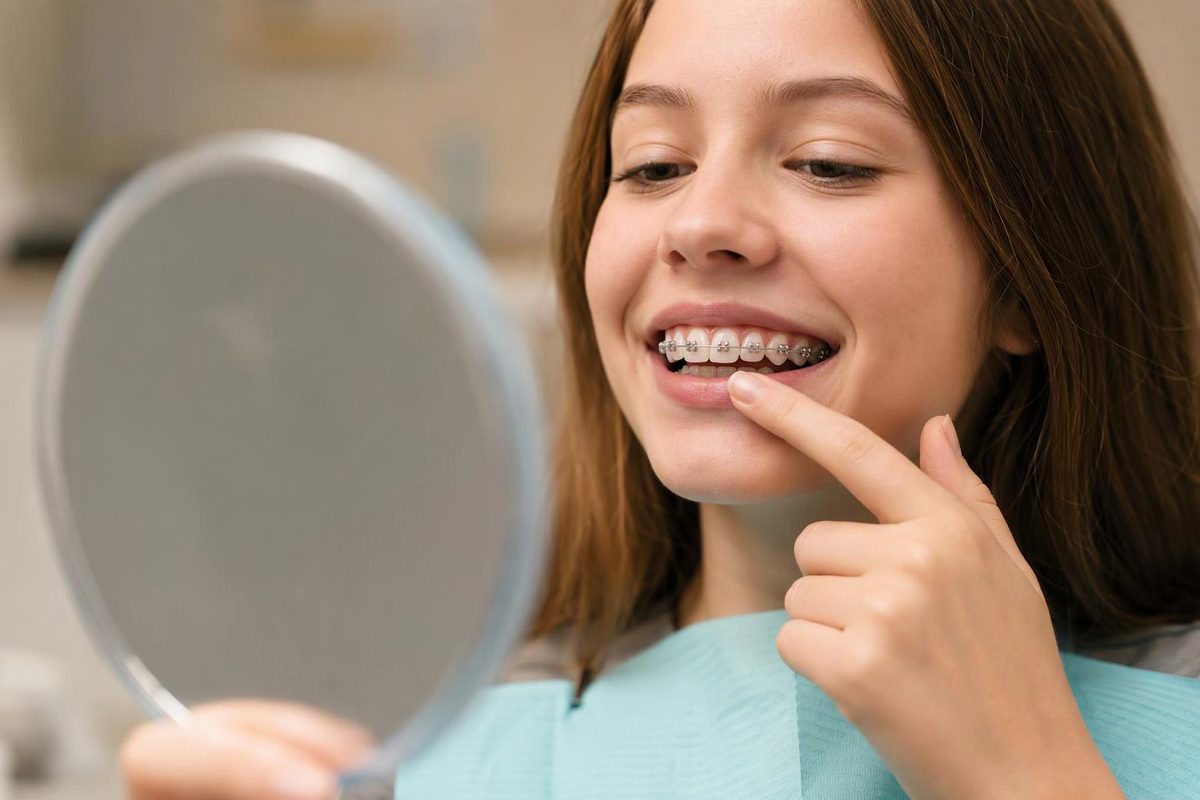
White marks on teeth with braces often mean the enamel has lost minerals—not simply that the tooth is stained. These areas, called white spot lesions, can be an early warning of decay. If you notice new marks, arrange a dental evaluation rather than waiting until your braces come off. Some early spots can improve, but others remain visible. American Association of Orthodontists (AAO)
Why do white marks develop around braces?
Brackets and wires make cleaning harder and create places where plaque can collect. Plaque bacteria use sugars and starches to produce acids. When acid exposure repeatedly outweighs the repair provided by saliva and fluoride, enamel loses minerals—a process called demineralization. The affected enamel reflects light differently, giving it a chalky, cloudy or matte appearance. Braces do not directly create the marks; they increase the opportunity for plaque to remain on the teeth. AAO; National Institute of Dental and Craniofacial Research (NIDCR)
Frequent sugary drinks and snacks increase acid attacks. Dry mouth can also contribute. But not every white patch is new decay: enamel changes during tooth development and childhood dental fluorosis can also leave white areas. Marks that existed before braces need a different assessment from newly developing patches around brackets. Appearance alone cannot confirm the cause. AAO
What to do if you already see marks
Book a dental check and tell your orthodontist. The dentist needs to confirm the cause, check whether decay is active and assess whether the enamel surface is still intact. Do not treat a new mark as only a cosmetic problem. AAO
While you wait, improve plaque removal and use fluoride toothpaste consistently. Ask whether you need professionally applied fluoride varnish or another fluoride product; extra products should follow your dental team’s advice. Fluoride can help stop or reverse early decay, but it cannot repair a hole that has already formed. A cavity needs a dentist’s repair. NIDCR
How to prevent new spots or further mineral loss
The priorities are removing plaque, reducing repeated acid exposure and supporting enamel repair:
- Brush with fluoride toothpaste at least twice daily, including before bed, and ideally after meals. Give the gumline and the areas above and below each bracket particular attention.
- Clean between teeth and beneath the wire every day. Floss threaders and appropriately sized interdental brushes can help reach places a toothbrush misses.
- Reduce frequent sugary or acidic drinks. Choose water most often; sipping sweet drinks throughout the day repeatedly exposes your teeth to acid. Limit frequent sugary snacks too, to give enamel time to recover between acid attacks. NIDCR
- Keep regular dental check-ups and cleanings. Orthodontic adjustment visits do not replace this routine dental care.
These measures are recommended by the AAO and the NHS. For the cleaning technique itself, see our step-by-step guide to brushing with braces.
Will the marks disappear after braces come off?
Some early lesions can become less noticeable as plaque control improves and enamel regains minerals. Deeper marks may persist. Stopping decay and making the colour look even are separate goals: better tooth health does not guarantee that a visible patch will disappear. AAO
If marks remain, a dentist may discuss:
| Option | What it is intended to do |
|---|---|
| Fluoride and monitored home care | Support mineral replacement and control early decay; appearance may improve over time. |
| Resin infiltration | Introduce a low-viscosity resin into porous enamel to reduce the visible contrast of suitable lesions. |
| Enamel microabrasion | Remove a superficial layer of affected enamel to improve the appearance of suitable surface lesions. |
Fluoride-based care is among the conservative approaches described in a systematic review of white spot diagnosis and treatment. A small randomized trial of post-braces lesions enrolled 20 teenagers, with 16 available at the 12-month follow-up. It found that resin infiltration and microabrasion both improved appearance, with improvements maintained through 12 months. The trial excluded cavitated lesions and developmental enamel defects, so its results do not apply to every white mark.
Before choosing a cosmetic procedure, ask: Is this active decay or an older enamel change? Is the surface intact? What improvement is realistic, and would treatment remove enamel? Those answers matter more than choosing a procedure by name.