
What Do Rubber Bands Do for Braces?
Rubber bands add targeted force to help braces correct your bite. Learn how they differ from bracket ties and how to follow your wear plan safely.
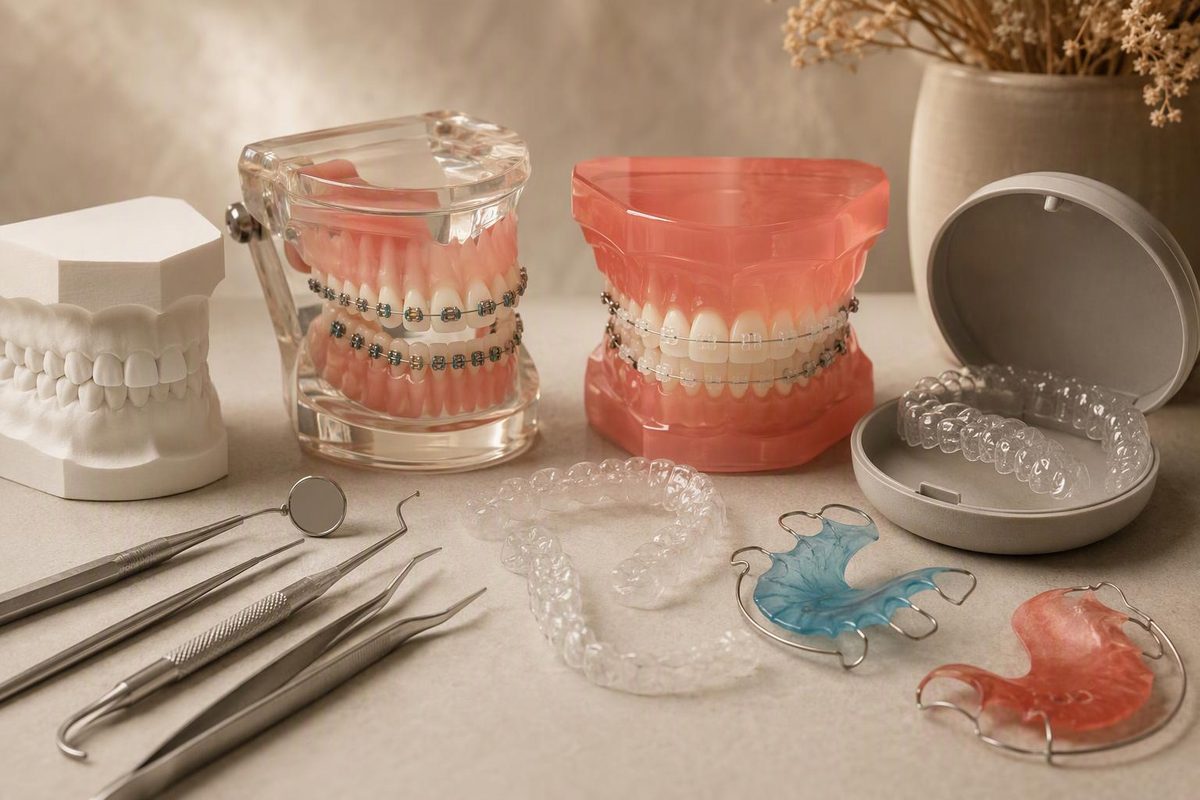
Rubber bands that stretch between hooks on your braces add targeted force to move teeth and improve how your upper and lower teeth fit together. Called orthodontic elastics, they work alongside the brackets and wire—not instead of them. Their attachment points determine which teeth they pull on and in what direction, according to the American Association of Orthodontists (AAO).
If you mean the tiny colored rings around each bracket, those do a different job: they hold the wire in place.
Two kinds of rubber bands, two jobs
| What you see | What it does | Who handles it |
|---|---|---|
| Small rings around individual brackets, called ligatures or O-rings | Hold the archwire in the bracket slots | Usually changed at adjustment appointments |
| Removable bands stretched between selected hooks, called elastics | Add force for specific tooth movements and bite correction | You put them on and replace them as prescribed |
A power chain—a connected row of elastic rings across several brackets—is different again: it can hold the wire and apply additional force to move teeth. Self-ligating braces use a built-in door rather than elastic rings to hold the wire. These distinctions are explained in the AAO’s orthodontic glossary. Having self-ligating braces does not rule out needing separate bite-correcting elastics.
How elastics help correct your bite
The wire moves teeth, while elastics supply additional force in a direction chosen for your treatment. They often connect upper and lower teeth, although some run between teeth within the same arch. Not everyone with braces needs them. Their use depends on the movements your orthodontist is trying to achieve. AAO guidance
Common purposes include:
- Reducing an overjet: Class II elastics can help move upper teeth back and lower teeth forward when the upper front teeth project too far ahead.
- Correcting an underbite: Class III elastics can help move lower teeth back and upper teeth forward.
- Closing an open bite: Vertical elastics can help bring upper and lower teeth into contact.
- Correcting certain crossbites: A different elastic arrangement may help teeth meet in the intended relationship.
These uses are described by the Australian Society of Orthodontists’ patient-information site. They are explanations, not placement instructions: the hooks and pattern must be selected for your bite. If you have been prescribed Class III bands, our guide to Class 3 orthodontic elastics covers that specific purpose and daily wear.
What wearing them involves
Elastics only supply their intended force while they are in place, so consistency matters. Repeatedly skipping wear can delay treatment. Use the schedule your orthodontist gives you rather than assuming that everyone needs the same number of hours. Australian Society of Orthodontists guidance
Before leaving the appointment, make sure you know:
- Exactly which hooks to use. Ask for a diagram or photograph if you might forget.
- How many hours to wear them, including whether to sleep in them.
- Whether to remove them for meals, and when to put fresh bands back on.
- How often to replace them and how to get more.
The AAO advises removing elastics for eating and brushing, then putting fresh ones on afterward; your orthodontist may give a different meal routine. Elastics lose strength with use, so replace them daily or as often as your orthodontist recommends. Wash your hands before handling them, carry spares, and contact the office before you run out. AAO care instructions
If you miss wear, resume your prescribed routine rather than trying to compensate with extra bands. Do not double up, change hooks or substitute a different size or strength yourself. Excessive force can harm teeth and jaws or slow movement. Use the elastics supplied by your orthodontist, not a friend’s bands or household rubber bands. AAO; Australian Society of Orthodontists
Discomfort and treatment timing
Some discomfort when starting elastics is normal and should be short-lived. If pain persists, contact your orthodontist so they can check the fit and instructions. Tell them about a known latex allergy; latex-free elastics are available. Australian Society of Orthodontists; AAO
Starting elastics is not a reliable countdown to getting your braces off: the elastic phase varies with your treatment needs. Ask: “What movement are these bands meant to achieve, and what will you check before changing or stopping them?” That gives you a more useful progress marker than comparing your schedule with someone else’s.
This is general orthodontic information; your treating orthodontist should set and adjust your elastic-wear plan.