
Teeth Straightening Cost by Type and Complexity
Compare braces and clear-aligner costs, quote exclusions, estimated extras and total financing cost to see what teeth straightening may really cost.
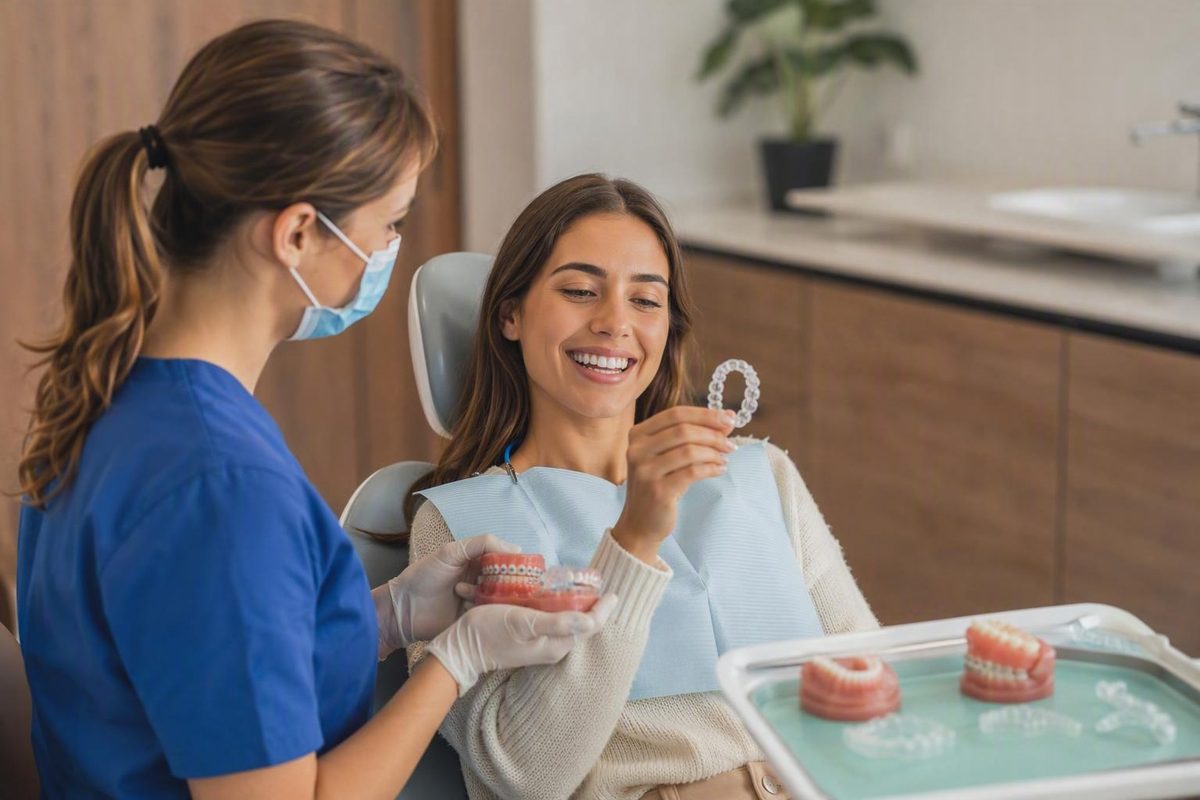
Most professionally supervised teeth-straightening treatment costs several thousand dollars before insurance. That broad benchmark can help with planning, but it is not a personal quote. What you pay depends on what must be corrected, which appliance is appropriate, how long treatment takes, what the provider includes, and whether insurance or financing changes your out-of-pocket cost.
The practical goal is not to find the lowest advertised starting price. It is to compare the total cost of clinically appropriate options using the same treatment scope, included services, follow-up period, and payment assumptions.
Teeth-straightening cost at a glance
Broad commercial estimates place many U.S. braces and clear-aligner treatments between roughly $3,000 and $8,500 before insurance. Lingual braces, which sit behind the teeth, are generally estimated substantially higher. Actual fees can fall below or above these ranges, and an examination is necessary before a provider can give you a dependable price.
Broad U.S. price estimates for 2026
| Treatment | Broad estimated price before insurance | Important context |
|---|---|---|
| Clear aligners | About $3,000–$8,000 | Price can vary with brand, complexity, treatment length, tray count, monitoring, and refinements |
| Traditional metal braces | About $3,000–$7,500 | Often near the lower end of comprehensive-treatment estimates, although complex cases can cost more |
| Ceramic braces | About $4,000–$8,500 | Less visible brackets may cost more, although provider pricing policies vary |
| Lingual braces | About $8,000–$13,000 | The highest-priced option in the available provider estimates |
These are commercial-source estimates, not independent national fee data. The metal, ceramic, and lingual figures come from a provider-published 2026 comparison that says actual prices vary with case complexity, treatment duration, and location. The clear-aligner range is also drawn from a provider guide rather than an independently validated national fee study.
The overlap matters more than the apparent ranking. A $3,000–$8,000 aligner range and a $3,000–$7,500 metal-braces range do not establish that one method is always cheaper. A limited aligner plan could cost less than comprehensive braces, while a complex aligner plan involving more trays or refinements could cost more. Packages may also include different diagnostics, retainers, visits, and follow-up care.
A separate benchmark comes from a CareCredit article published in March 2025. It reported an average uninsured clear-aligner cost of $5,108 and a range of $1,800–$8,100, with variation by location and treatment needs. Those figures apply to clear aligners—not every teeth-straightening method—and the supplied material does not provide the full research methodology. CareCredit also markets healthcare financing, so the figures are best treated as a commercial benchmark rather than a definitive national average. Review CareCredit’s clear-aligner cost breakdown.
Do not combine these figures into a supposed average for all orthodontic treatment. They describe different appliances, sources, years, assumptions, and patient populations. None predicts what a particular adult or child will pay.
How costs compare by treatment type
Each price reflects more than the appliance itself. You may be paying for diagnosis, customized treatment planning, fabrication, professional monitoring, adjustments, refinements, and retention. Understanding what differs among treatment types makes a quote easier to evaluate.
Metal braces
Traditional metal braces commonly occupy the lower end of provider-published estimates for professionally supervised comprehensive treatment.
That does not mean every metal-braces case is inexpensive. Significant crowding, bite correction, prolonged treatment, specialty appliances, repairs, or additional monitoring can push a quote toward or beyond the top of a published range. The provider’s fee structure and included services matter as much as the brackets.
Metal braces are fixed rather than removable. Whether that makes them more suitable than trays depends partly on the proposed correction and whether the patient can follow the wear schedule required for a removable appliance. Those are clinical and practical questions to discuss during an assessment, not conclusions to draw from price alone.
Ceramic braces
Ceramic braces use clear or tooth-colored brackets to make the appliance less noticeable from the front. Provider estimates generally place them above traditional metal braces, including approximately $4,000–$7,000 in one practice guide. That guide also identifies case complexity, duration, location, provider experience, and specialty appliances as factors that can affect the fee. See the practice’s treatment ranges and cost factors.
A higher published range does not prove that every office charges a ceramic-bracket premium. One provider might include the upgrade in a comprehensive fee, while another could charge separately. Ask whether the quote covers ceramic brackets on every tooth or only more visible teeth, and whether replacing damaged brackets changes the fee.
Clear aligners
Clear aligners are removable trays created to move teeth in planned stages. Their cost can reflect:
- The aligner brand or system
- Digital scans and treatment planning
- The anticipated number of trays
- Attachments or auxiliary features
- The amount of professional monitoring
- Treatment duration
- Refinement trays after the initial series
- Replacement policies for lost or damaged trays
- Retainers and post-treatment monitoring
Clear aligners cannot be classified as categorically cheaper or more expensive than braces. Their published price range overlaps substantially with metal braces, and two apparently similar quotes may purchase different services. One could cover a limited number of trays and refinements, while another could cover comprehensive treatment and a longer follow-up period.
Clinical suitability also matters. Large rotations, major vertical movements, complex jaw discrepancies, and other difficult corrections may change whether aligners, braces, or combined treatment are proposed. An examination, bite evaluation, and diagnostic records are needed to make that determination. Review the provider’s explanation of aligner candidacy and assessment.
The appropriate comparison is therefore not “aligners versus braces” in the abstract. It is the complete aligner plan recommended for your diagnosis versus the complete braces plan recommended for the same goals.
Lingual braces
Lingual braces are attached behind the teeth, making them less visible from the front. They are the highest-priced option in the supplied estimates.
A provider-authored 2026 article places lingual braces at $8,000–$13,000 and attributes the premium to customized brackets, specialized provider training, longer appointments, and the limited number of clinicians offering the technique. This remains an attributed practice estimate rather than an independently established national average.
Someone seeking discreet treatment might compare lingual braces with ceramic braces and clear aligners. Visibility is only one consideration. Clinical suitability, local availability, expected appointments, treatment scope, compliance demands, and all-in cost may point toward a different option.
What about veneers?
Veneers may change the visible appearance of selected cosmetic concerns, including the appearance of minor irregularity. A dental provider’s comparison makes the same distinction between changing appearance and correcting tooth alignment. See the provider’s comparison of braces, aligners, ceramic braces, and veneers.
Someone considering veneers as an alternative should ask whether the goal is cosmetic masking or actual tooth and bite movement. These are different treatment categories and should not be compared only by headline price.
Why one patient may pay much more than another
Two patients can choose the same type of appliance and receive very different quotes. That does not necessarily indicate inconsistent pricing: they may require different amounts of movement, treatment time, planning, appliances, and monitoring.
Case complexity is a major factor
Minor spacing or crowding may require fewer movements and a more limited treatment plan. Substantial crowding, bite correction, difficult rotations, vertical movements, or other complex corrections may require:
- More treatment stages or aligner trays
- Additional attachments or appliances
- More appointments and monitoring
- A longer active-treatment period
- One or more rounds of refinement
- A different appliance from the one the patient initially preferred
A treating professional must assess what movements are needed and which appliance is suitable.
Duration and appliance count
Longer treatment can mean more appointments, adjustments, monitoring, or aligner sets. That can affect the fee, but there is no universal price per month or price per tray. One provider may charge a comprehensive case fee, while another may price treatment by package level or included services.
Published duration estimates also differ. One provider article describes clear-aligner treatment as averaging roughly six to 18 months depending on treatment needs, while another gives a broader 12-to-24-month estimate for braces or clear aligners. These differences reflect varying case mixes and assumptions; they do not support a promise that one appliance will always finish sooner or cost less.
Location, provider, brand, and planning technology
Geography can influence office expenses and local pricing. The provider sets the professional fee, and factors such as treatment approach, experience, appliance brand, laboratory costs, customization, and planning technology may affect the quote.
A higher fee is not automatically better, and a lower fee is not automatically equivalent. Compare the proposed treatment scope and included services rather than assuming different providers are selling identical packages.
Preparatory dental work
Depending on the patient, preparatory care could include:
- A cleaning
- Periodontal care
- Fillings
- Restorations
- Extractions
- Other treatment required before tooth movement begins
These services can increase the overall amount spent if they are clinically required and excluded from the orthodontic contract. Ask whether the estimate assumes all necessary general dental care has already been completed.
Severity bands are illustrations, not standards
Some provider-created guides divide aligner treatment into mild, moderate, and complex bands. One 2026 dental-practice article, for example, illustrates mild cases as involving approximately 10–20 aligners, moderate cases as 20–35, and complex cases as 35–50 or more, with rising time and price estimates. The article does not disclose a national dataset establishing those categories. Review the provider’s illustrative severity and aligner-count bands.
Such bands can illustrate the general relationship: more difficult treatment may require more trays, time, planning, and monitoring. They are not validated national standards and should not be used to diagnose your case or predict your bill.
Why an examination is essential
A dependable quote requires enough diagnostic information to define the proposed treatment. That generally means a clinical examination, bite assessment, and scans or other records selected by the provider. A clinician-authored practice article similarly explains that a consultation is needed to assess severity, identify other dental concerns, determine whether aligners are suitable, and provide an individualized price. See why a consultation is needed for a case-specific estimate.
Without that information, an advertised price is only a starting point. It cannot establish whether you need limited cosmetic alignment, comprehensive bite correction, braces, aligners, auxiliary appliances, or preliminary dental care.
The treatment fee versus the all-in cost
The headline treatment fee and the amount spent throughout the full treatment lifecycle may not be the same.
Some practices bundle most services into one comprehensive fee. Others charge separately for particular records, replacements, refinements, retainers, or extended care. The available evidence does not establish a universal orthodontic package, so obtain the inclusions and exclusions in writing.
Itemized quote checklist
For every quote, ask whether the following are included, excluded, or charged only under particular circumstances:
- Initial consultation
- Clinical examination
- X-rays, photographs, impressions, or digital scans
- Diagnosis and treatment planning
- Brackets, wires, or clear-aligner trays
- Attachments, elastics, or specialty appliances
- Routine monitoring visits
- Braces adjustments
- Emergency or unscheduled visits
- Repairs to brackets, wires, or appliances
- Clear-aligner refinements
- Replacement trays for loss or damage
- Additional visits if treatment takes longer than projected
- Removal of braces or attachments
- Initial retainers
- Replacement retainers
- Post-treatment monitoring
- Records or fees associated with transferring to another provider
Do not assume the word “comprehensive” answers every question. Ask how the contract defines comprehensive treatment, how long coverage lasts, and whether refinements, visits, repairs, or replacement appliances are limited.
Costs especially worth confirming
Confirm whether refinement trays are included, whether there is a time or quantity limit, and what happens if treatment extends beyond the original projection.
Ask about replacement charges and what the provider recommends if a tray cannot be used.
For braces, determine whether routine breakages and emergency visits are covered. The contract may distinguish between expected treatment needs and repeated appliance damage.
Retention should be considered part of the long-term budget after active orthodontic treatment, whether the teeth were moved with braces or aligners. The evidence specifically confirms that retainers are needed after clear-aligner treatment to help maintain results, but initial retainers are not necessarily included in every package and replacements may cost extra. Provider guidance also advises checking consultations, scans, visits, refinements, replacement trays, and retainers rather than assuming they are bundled. Review the package questions identified by the provider.
There is not enough consistent evidence to assign dependable national averages to retainers, imaging, repairs, refinements, or replacement trays. Request local, case-specific fees instead.
Put competing quotes on equivalent terms
Before deciding that Quote A is cheaper than Quote B, align:
- The diagnosis and treatment goals
- Limited versus comprehensive treatment
- The appliance or aligner system
- Included diagnostic records
- Included appointments and monitoring period
- Refinement or repair policies
- Initial and replacement retainer terms
- Insurance assumptions
- Cash price and financed total
A higher inclusive quote can ultimately cost less than a lower quote that excludes records, refinements, retainers, and follow-up care.
How dental insurance changes out-of-pocket cost
Dental insurance may reduce what you pay, but orthodontic coverage is generally partial and plan-specific. Coverage for routine dental care does not automatically mean the policy covers braces or clear aligners.
Coinsurance, fixed benefits, and lifetime maximums
Orthodontic benefits may be described using one or more of these terms:
- Coinsurance: The plan pays a stated percentage of an eligible charge.
- Fixed benefit: The plan contributes a specified dollar amount.
- Lifetime orthodontic maximum: The total the plan will pay for orthodontic care for that covered person.
A lifetime maximum can override what a percentage initially appears to promise.
Illustration only: Suppose treatment costs $6,000 and the plan is described as covering 50%. Half would be $3,000, but if the patient has only $1,500 remaining under the lifetime orthodontic maximum, the insurer would pay no more than $1,500. Actual payment would still depend on eligibility, covered charges, network rules, timing, and other policy terms.
Commercial sources sometimes cite possible orthodontic benefits around $1,000–$3,500 or a percentage up to a specified lifetime limit. Those figures are neither guaranteed nor representative of every plan. One practice guide gives those examples while repeatedly qualifying coverage as plan-dependent. Review the guide’s discussion of benefits and possible exclusions.
Questions to ask the insurer
Verify all of the following directly:
- Does the policy include orthodontic coverage?
- Are adults covered, or only dependent children?
- Is there an age restriction?
- Does the plan cover the proposed appliance?
- Are clear aligners treated differently from braces?
- Is there a waiting period?
- Is preauthorization required?
- Must you use an in-network provider?
- What coinsurance or fixed benefit applies?
- What was the original lifetime orthodontic maximum?
- How much of that maximum remains?
- Is payment made over the course of treatment?
- What happens to future installments if coverage ends?
- Does the insurer base payment on the provider’s fee or another allowed amount?
Ask for a written pre-treatment estimate showing expected insurer payments and patient responsibility. Treat it as an estimate rather than a guarantee until claims are processed.
Older insurance statistics require particular caution. Invisalign cites 2021 data covering 112,243 insured U.S. patients who used one OrthoFi benefits-verification tool, including an average orthodontic benefit of $1,772. That was a specific insured user population, not all orthodontic patients, and it should not be generalized to current national coverage. See the manufacturer’s cost page and its insurance qualifications.
Payment plans, financing, HSAs, and FSAs
A payment plan can improve monthly cash flow without reducing the underlying treatment price. Financing can increase the final amount paid if interest or fees apply.
Evaluate the entire financing agreement
Before accepting a monthly payment, obtain:
- Cash price
- Down payment
- Amount financed
- Repayment period
- Annual percentage rate, or APR
- Origination or administrative fees
- Late-payment terms
- Deferred-interest conditions
- Credit or eligibility requirements
- Monthly payment
- Number of payments
- Total financed repayment
- Total of the down payment and all scheduled payments
An advertised monthly amount is incomplete without the down payment, term, APR, and fees. A lower monthly payment may simply reflect a longer repayment period or a larger initial payment.
Invisalign’s consumer cost page presents three expressly hypothetical brand examples with provider fees from $5,490 to $7,000 and different insurance, down-payment, and monthly-payment assumptions. Those examples are not typical bills or representative financing offers, and the displayed monthly figures do not provide complete financing terms. They illustrate only how insurance and payment structures can change the remaining balance.
HSA and FSA funds
The Invisalign manufacturer identifies HSA and FSA funds as potential payment methods while directing patients to confirm their individual options. Review the manufacturer’s payment-method information.
Using HSA or FSA money changes how an eligible expense is paid. It should not be described as a guaranteed discount or universal tax saving. Confirm:
- Whether the treatment or charge is eligible
- Whether payment timing meets the account rules
- What documentation is required
- Whether reimbursements and direct provider payments are handled differently
- Whether applicable FSA deadlines affect the plan
Do not let a payment method obscure the price. Request both the cash price and total financed repayment before signing.
Calculate your likely all-in and out-of-pocket cost
Turn each provider quote into a personal budget using two related calculations.
Treatment fee + excluded extras − confirmed insurance benefit = estimated patient cost before financing
Then calculate the remaining balance:
Estimated patient cost − down payment + financing interest and fees = estimated remaining balance after the down payment
A down payment reduces the amount left to pay later, but it does not reduce the treatment’s total cost. To calculate total out-of-pocket spending, include the down payment, all later payments, and any separately charged financing fees.
Illustrative uninsured scenario
Assume:
- Clear-aligner treatment fee: $5,100
- Excluded records and retainers: $500
- Insurance: $0
Calculation:
$5,100 + $500 = $5,600 estimated all-in cost before financing
The $500 is hypothetical and is not a market average for records or retainers. If the patient finances the balance, interest and fees would be added to the amount ultimately paid.
Illustrative insured scenario
Assume:
- Treatment fee: $6,000
- Hypothetical excluded extras: $400
- Confirmed estimated insurance benefit: $2,000
Calculation:
$6,000 + $400 − $2,000 = $4,400 estimated patient responsibility before financing
If the patient then makes a $1,000 down payment, the remaining balance would be $3,400. The total patient cost would not fall by $1,000; that amount was simply paid earlier.
Financing check
Compare these two totals:
Cash total
Treatment fee + excluded extras − confirmed insurance benefit
Financed total paid by the patient
Down payment + sum of all monthly payments + separately disclosed fees
Multiply the monthly payment by the number of payments, then add the down payment and any fees not already included. Compare that result with the cash price. If the agreement contains deferred interest, ask what conditions must be met to avoid it and what may be charged if those conditions are not satisfied.
Include a contingency line for contract exclusions such as replacement trays, repairs, extra refinements, or replacement retainers. There is no supported standard percentage to use, so base the contingency on the provider’s written fee schedule and contract.
Quote worksheet
Use one copy of this worksheet for each provider:
| Field | Your information |
|---|---|
| Treatment type | |
| Diagnosis and treatment goals | |
| Limited or comprehensive scope | |
| Expected duration | |
| Gross treatment fee | |
| Consultation included? | |
| Examination and records included? | |
| Routine visits included? | |
| Refinements or repairs included? | |
| Initial retainers included? | |
| Replacement retainers included? | |
| Post-treatment monitoring included? | |
| Other excluded extras | |
| Insurer’s estimated payment | |
| Remaining lifetime benefit | |
| Cash price after insurance | |
| Down payment | |
| APR | |
| Repayment term | |
| Financing fees | |
| Monthly payment | |
| Number of payments | |
| Total financed repayment | |
| Contingency for excluded services | |
| Estimated all-in patient cost |
The worksheet will not make an uncertain insurance estimate certain, but it exposes assumptions that a headline price or monthly payment may hide.
How to compare quotes and choose the least expensive appropriate option
The least expensive option is the least expensive clinically appropriate treatment—not necessarily the lowest advertised offer.
A starting price may apply only to minor cosmetic movement. A more expensive proposal could cover comprehensive bite correction, a longer monitoring period, refinements, repairs, and retainers. Before comparing prices, confirm that the providers are proposing equivalent goals.
Consultation checklist
Ask each provider:
Diagnosis and scope
- What is the diagnosis?
- What tooth and bite movements are being proposed?
- Is this limited or comprehensive treatment?
- What concerns will the plan address?
- What concerns will it not address?
- Why is this appliance suitable?
- Are other clinically appropriate options available?
- What could cause the plan, duration, or fee to change?
Treatment schedule
- What is the estimated treatment duration?
- How often are scheduled visits expected?
- What assumptions does that estimate make?
- What happens financially if treatment takes longer?
- Could additional trays, appliances, or procedures become necessary?
Included services
- Are the consultation and examination included?
- Are X-rays, photographs, and digital scans included?
- Are all scheduled visits included?
- Are aligner refinements included, and are they limited?
- Are braces repairs or emergency visits included?
- Are initial retainers included?
- What do replacement retainers cost?
- How long does post-treatment monitoring continue?
Patient-related events and contract changes
Ask how the contract handles:
- Lost aligner trays
- Broken appliances
- Missed appointments
- Prolonged treatment
- Pausing or cancelling treatment
- Moving away
- Transferring to another provider
- Switching appliance types
- Ending treatment before completion
These are questions, not assumptions. The available evidence does not establish standard financial policies for cancellation, transfers, prolonged treatment, or refunds.
Insurance and payment
Request all of the following in writing:
- Gross treatment fee
- Cash price
- Expected insurance payment
- Patient responsibility if insurance pays less than estimated
- Down payment
- Monthly payment
- APR
- Financing fees
- Repayment term
- Total financed repayment
A provider may be unable to guarantee what an insurer will pay, but the quote should clearly separate the office fee from the estimated benefit.
For a broader look at nonprice considerations, Aligner Source offers a separate comparison of metal, ceramic, and lingual braces with clear aligners, including visibility and daily-life trade-offs. Use it to prepare questions, not as a substitute for a clinical assessment or as market evidence for a provider’s fee.
Frequently asked questions
How much does teeth straightening cost without insurance?
Many professionally supervised treatments cost several thousand dollars. One 2026 provider comparison estimates metal braces at approximately $3,000–$7,500, ceramic braces at $4,000–$8,500, clear aligners at $3,500–$8,500, and lingual braces at $8,000–$13,000. These are commercial estimates, and actual fees can fall outside them. See the provider’s 2026 comparison and qualifications.
Without insurance, budget for the entire provider fee plus any excluded records, preliminary dental work, refinements, repairs, replacement appliances, retainers, and financing charges. An examination and itemized quote are necessary to estimate your actual cost.
Are braces cheaper than clear aligners?
Sometimes, but not universally. Published metal-braces and clear-aligner estimates overlap substantially. A complex or lengthy braces case can cost more than a limited aligner plan, while comprehensive aligner treatment involving numerous trays or refinements can cost more than braces.
Compare quotes only after confirming that both address the same diagnosis and include equivalent records, visits, refinements or repairs, retainers, and follow-up care.
Does dental insurance cover adult braces or clear aligners?
Some plans may cover adult orthodontics, while others limit benefits to dependent children or exclude orthodontic care. Policies may also impose age restrictions, waiting periods, network requirements, appliance rules, preauthorization, coinsurance, and a lifetime orthodontic maximum. Provider guidance emphasizes that coverage and restrictions vary by plan. Review the practice guide’s insurance qualifications.
Contact the insurer before treatment and request a written pre-treatment estimate. Confirm the remaining lifetime benefit rather than relying only on a stated coverage percentage.
Are retainers, refinements, and replacement aligners included in the quoted price?
They may be, but there is no universal package. Some providers include initial retainers and a defined number of refinements; others charge separately. Replacement aligners lost or damaged by the patient may also be treated differently from planned refinement trays.
Retainers are needed after clear-aligner treatment to help maintain the result, and replacement retainers may cost extra. CareCredit’s treatment overview notes the need for post-treatment retainers. Ask for written terms covering initial and replacement retainers, refinements, lost trays, damaged appliances, emergency visits, and post-treatment monitoring.
Can I get an accurate teeth-straightening quote without an examination?
Not usually. An advertised starting price or online estimate can provide a rough budget, but it cannot determine your diagnosis, bite relationship, case complexity, preparatory dental needs, or whether braces or aligners are appropriate.
A dependable quote requires a professional assessment and the diagnostic records the provider considers necessary, which may include scans, photographs, or X-rays. That evaluation allows the provider to define the treatment scope, expected duration, included services, and case-specific fee. See the clinician-authored explanation of why a consultation is necessary.
Broad price ranges can establish an initial budget, but an itemized, case-specific quote is the only dependable estimate. Compare clinically appropriate options using the same diagnosis, treatment scope, inclusions, and follow-up period. Verify insurance directly, calculate total financing cost instead of focusing on the monthly payment, and include retention in the long-term budget.
Important: This article provides general information. Treatment choice, suitability, duration, and individual cost require professional assessment, diagnostic records, and a provider-specific plan. Make orthodontic treatment decisions with a qualified orthodontic professional.