
Can Invisalign Fix an Underbite? Teeth vs. Jaw Position
Invisalign can correct some underbites, but tooth movement cannot fix every jaw mismatch. Learn when aligners, growth treatment or surgery may fit.
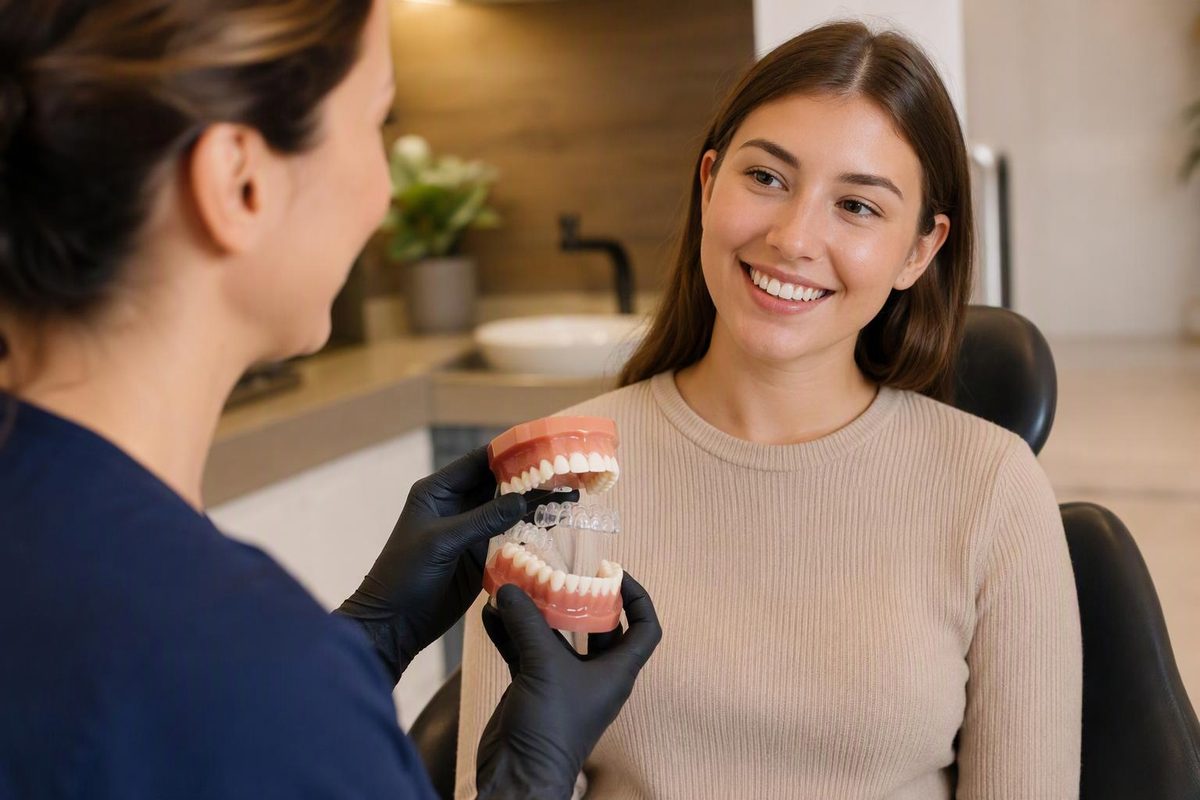
Yes—Invisalign can correct some underbites, particularly mild cases caused mainly by tooth position. It is not a way to correct every mismatch between the upper and lower jaws. The key question is whether moving the teeth can create a healthy bite, or whether the jaw relationship itself needs treatment. The American Association of Orthodontists (AAO) identifies mild, largely dental underbites as a good fit for clear aligners.
Tooth position or jaw position?
An underbite means the lower front teeth sit ahead of the upper front teeth when you bite down. Its cause may be dental—the teeth’s positions—or skeletal—the size or position of the jaws—or a combination. That distinction matters more than appearance alone.
| Main issue | What it means for treatment |
|---|---|
| Mostly tooth position | Aligners or braces may correct the bite through tooth movement. |
| A jaw mismatch that allows dental compensation | An orthodontist may consider moving teeth to compensate for the mismatch, rather than correcting the jaws themselves. |
| A substantial skeletal mismatch | Tooth movement alone may not be enough; jaw surgery combined with orthodontics may be recommended after growth is complete. |
The AAO explains that diagnosis may involve an examination, X-rays, photos and scans or impressions to assess the teeth, roots and jaw relationship—not just whether the front teeth can be made straighter. Its underbite guidance outlines the dental and skeletal treatment options; the compensation approach is illustrated in the case report below.
What Invisalign can—and cannot—change
Invisalign uses a planned sequence of removable trays to move teeth. The manufacturer explains that a digital treatment plan maps the intended movements. An underbite plan may involve moving or tipping teeth so the upper and lower arches meet differently. Some plans also use elastics, commonly called rubber bands, to help produce the intended tooth movements.
A systematic review of clear-aligner Class III treatment describes selected cases treated using Invisalign and lower-tooth movement, sometimes with elastics or other aids. Class III is an orthodontic bite classification often associated with underbite. The review included case reports, small case series and retrospective studies; it does not establish that Invisalign will work for every underbite or provide a dependable personal success rate.
For a skeletal underbite, the distinction to understand is camouflage versus jaw correction. Camouflage means adjusting tooth positions to compensate for the jaw mismatch. It can improve how the teeth meet without correcting the underlying skeletal relationship.
A published case using a different clear-aligner brand illustrates this clearly: aligners and elastics improved the dental bite, while the skeletal Class III relationship remained. That is an example of compensation, not proof that trays reposition adult jaw bones.
If avoiding surgery is your goal, ask what compromise a nonsurgical plan would involve. Braces are another tooth-moving option, but a different appliance does not automatically eliminate the need to address a substantial jaw mismatch.
Children need a growth-aware assessment
A child with an underbite should not simply wait until they are old enough for adult-style aligner treatment. Growing children may have options that are unavailable after jaw growth finishes. For some jaw-development problems, treatment may include reverse-pull headgear with a palatal expander.
The AAO recommends a first orthodontic evaluation by age seven. That is a screening checkpoint, not a requirement that every child begin treatment then. Our guide to early orthodontic intervention explains how to distinguish a time-sensitive treatment goal from monitoring.
What to ask before choosing Invisalign
Bring these questions to an orthodontic consultation:
- Is my underbite dental, skeletal or mixed? Ask the orthodontist to show you the findings behind the diagnosis.
- Is the proposed plan correcting the problem or compensating for it? Clarify the expected bite and facial-profile changes, and what will remain unchanged.
- Why choose aligners rather than braces? Ask which required movements favor each option and whether elastics or other appliances are needed.
- What happens if the bite does not respond as planned? Discuss additional aligner sets, a change of appliance and any extra fees.
- What is the full commitment? Request an estimate covering active treatment, possible refinements, appointments and retainers—not just the first tray sequence.
Daily wear also matters. Invisalign’s manufacturer states that typical wear is 20–22 hours a day, with the exact schedule set by the treating doctor. It also advises discussing retainers to prevent teeth shifting after treatment.
For planning beyond the initial estimate, see the separate phases of an Invisalign timeline. If you have difficulty biting or chewing, jaw discomfort, or uneven tooth wear, mention those symptoms during your evaluation rather than treating the underbite as only an appearance concern. The AAO lists these as reasons to seek assessment.
This is general educational information; an orthodontic examination is needed to determine which approach fits your bite.